Blog

  • Unlocking Hidden Prompt Integration for Brand Awareness: The Complete 2025 Playbook

    Unlocking Hidden Prompt Integration for Brand Awareness: The Complete 2025 Playbook

    If your brand is not cited when artificial intelligence (AI) assistants summarize your topic, you are invisible in a fast growing channel, which is why hidden prompt integration for brand awareness has become a critical strategy in 2025. People increasingly ask ChatGPT, Bing Copilot, and Google Search Generative Experience (SGE) for answers, then act without ever clicking a link, and that shift pressures brands to earn mentions inside synthesized responses rather than only on a search engine results page (SERP). Many businesses struggle to rank well in AI-driven search results and need effective strategies to increase brand visibility and organic traffic, and the solution begins with structured, ethical signals that help models attribute expertise. Think of it as placing clear signposts that guide systems toward your entity, products, and proof without resorting to hacks.

    In this playbook, you will learn how to design those signposts, how to deploy them across your content stack, and how to measure their impact with clear key performance indicators (KPI). Along the way, you will see how SEOPro AI5, the latest evolution of the SEOPro AI platform, uses large language model (LLM)-based search engine optimization (SEO) tools, automated content publishing, and cross platform orchestration to scale the approach responsibly. The goal is not to trick any model, it is to present accurate, verifiable, and well structured information so assistants can confidently mention your brand when users ask relevant questions. Ready to earn a larger share of the new attention stream without compromising user trust or platform policies?

    Why the Artificial Intelligence (AI) Discovery Shift Changes Brand Strategy in 2025

    The center of gravity in discovery has moved from blue links to synthesized answers, which means your brand narrative is now reconstructed by systems that blend documents, entities, and citations into compact paragraphs. Analyst briefings and platform updates suggest that a significant share of informational and navigational queries will be answered inline by assistants during the next year, a pattern already visible in the way Search Generative Experience (SGE) panels compress research steps. As a result, classic engagement metrics like click through rate (CTR) may decline even while conversions and assisted conversions rise, because the decision making moves upstream into the summary layer that users trust to save time. If you want to win those summaries, your content must be machine legible, entity centric, and backed by clear evidence the models can quote and attribute.

    This is where brand mentions become a new currency for search engine optimization (SEO) outcomes, because a mention inside an authoritative answer can drive branded queries, direct navigation, and higher search engine results page (SERP) preference even when traffic to the individual article does not spike. Practically, that means doubling down on structured data, consistent naming conventions, and content patterns that large language models (LLM) reliably understand, while sustaining human readability and accessibility. It also means treating your brand as a first class entity with relationships to products, features, awards, authors, and customer outcomes, then signaling those relationships in ways that retrieval and ranking systems can fetch at summary time. When you align these pieces, assistants have fewer reasons to omit you, and more reasons to cite you as a credible source.

    What Is Hidden Prompt Integration for Brand Awareness and How It Works

    Hidden prompt integration for brand awareness is the practice of embedding brand safe, machine readable cues throughout your content and metadata so assistants can recognize, retrieve, and attribute your expertise when they generate answers. These cues are not deceptive instructions, they are structural and semantic signals like consistent entity naming, schema markup, clarified citations, author credentials, and on page patterns that large language models (LLM) repeatedly interpret as helpful context. Imagine leaving breadcrumb trails for models, where each crumb is a proof point, a definition, or a relationship that increases the probability your brand appears when people ask relevant questions. You are designing for both humans and machines, with careful attention to clarity, verifiability, and policy compliance across platforms.

    Watch This Helpful Video

    To help you better understand hidden prompt integration for brand awareness, we’ve included this informative video from SuperHumans Life. It provides valuable insights and visual demonstrations that complement the written content.

    Equally important is understanding what this approach is not, because the line between optimization and manipulation matters for user trust and long term performance. It is not prompt injection, jailbreaks, or covert strings meant to override a system’s guardrails, and it is not hidden text that humans cannot access or verify. It is a disciplined way to package expertise so that retrieval, ranking, and summarization systems can evaluate your claims and decide to mention you for the right reasons. Brands that follow this path tend to earn more consistent mentions over time, because they reinforce the model’s confidence through repeatable patterns and strong evidence rather than shortcuts that get patched or penalized.

    The Playbook: Strategy to Execution in Eight Practical Steps

    Illustration for The Playbook: Strategy to Execution in Eight Practical Steps related to hidden prompt integration for brand awareness

    To implement this approach, think in two tracks that reinforce each other. The strategy track establishes the brand entity, the audience problems, and the differentiation you want assistants to understand, while the execution track turns that strategy into content assets, markup, distribution, and measurement. Start by writing a crisp, canonical description of your brand, products, and unique proof points that you will repeat verbatim in key locations, because consistency trains retrieval systems to recognize the same entity across documents. Then map the high intent questions your market asks in artificial intelligence (AI) assistants, benchmark which competitors get cited, and decide where your authority should logically earn a mention that benefits the user.

    1. Define your brand entity and claims. Create a concise, evidence backed brand description, product taxonomy, and key differentiators with citations and awards to anchor authority.
    2. Standardize naming. Use a single canonical brand name, product names, and author names everywhere, including filenames, headings, and internal links, to reduce entity ambiguity.
    3. Design LLM aware briefs. For each topic, include a user problem statement, definitions, step by step guidance, and definitive answers that can be summarized without losing nuance.
    4. Embed schema markup. Add Organization, Product, FAQ, HowTo, and Author schema where appropriate so retrieval engines can map relationships and credentials more reliably.
    5. Write entity first content. Lead with definitions and outcomes, place stats near claims, and add short citations so models have quotable anchors for attribution.
    6. Publish consistently across platforms. Distribute to your site, documentation, and relevant profiles so assistants that pull from multiple sources can corroborate your story.
    7. Instrument measurement. Track mention share inside answer snapshots, branded queries growth, and assisted conversions to see whether summaries influence behavior.
    8. Review and refresh. Update proofs, dates, and guidance on a cadence so assistants prefer your fresher sources when summarizing fast moving topics.

    SEOPro AI5 operationalizes each step with automation that respects platform policies and accessibility. The platform combines AI driven blog writing, large language model (LLM)-based search engine optimization (SEO) tools, hidden prompt integration for brand mentions, and automated content publishing across multiple artificial intelligence (AI) search surfaces such as Google, ChatGPT, and Bing. If your team is small, this orchestration prevents the usual bottlenecks by generating on brief drafts, inserting consistent brand definitions, enriching with schema, and shipping on schedule, then monitoring which assets correlate with higher mention share. When you can create, structure, publish, and learn in one loop, the flywheel spins faster and the risk of fragmented signals drops sharply.

    Tools and Techniques: From Schema to Large Language Model (LLM) Aware Writing

    Translating strategy into assets requires a toolkit that balances human clarity with machine legibility, and the most effective stacks blend content patterns, markup, and distribution. Start with content templates that open with a direct definition, follow with a two to three step solution, and conclude with verified examples, because this mirrors the way assistants compress information for readers. Layer on Organization, Product, FAQ, and HowTo schema so retrieval systems can crawl and map your claims, and remember to include author and reviewer credentials to support Experience, Expertise, Authoritativeness, and Trustworthiness (E-E-A-T) assessments. Finally, make sure your content management system (CMS) and publishing process propagate canonical brand descriptions and product names exactly, so your signaling is consistent across pages, feeds, and documentation.

    Element Purpose Where It Lives Example Pattern Supported in SEOPro AI5
    Canonical brand definition Reduce entity ambiguity and improve attribution About page, boilerplates, author bios, product pages “SEOPro AI5 is a platform that automates the creation of SEO optimized content through artificial intelligence (AI), improving indexing and brand mentions.” Yes, inserted automatically in briefs and pages
    Schema markup Explain relationships between brand, products, authors JSON-LD blocks, page head Organization, Product, FAQ, HowTo, Author Yes, generated and validated on publish
    LLM aware headings Enable clean summarization and quoting H1, H2, FAQ sections Lead with definition and outcome, then steps Yes, via AI driven blog writing
    Evidence blocks Provide citations and dates near claims Inline paragraphs, footnotes “Industry surveys in 2024 indicate a majority of buyers begin with assistants.” Yes, templated callouts with sources
    Multi platform publishing Increase corroboration across surfaces Website, docs, partner profiles Consistent naming, canonical URLs Yes, automated distribution and link tracking
    Hidden prompt integration for brand mentions Reinforce accurate brand recognition in summaries Briefs, metadata, structured passages Entity first introductions and repeated canonical phrasing Yes, policy compliant signal packaging

    To make this concrete, consider three common scenarios. A software company that sells workflow tools can publish definition led guides for each job to be done, include concise checklists and HowTo schema, and repeat a one sentence brand description that assistants can cite when summarizing purchase considerations. A multi location services brand can standardize naming conventions and local entity details, then use question led FAQs that assistants often lift into local answers. A consumer brand can add short, verifiable comparisons that make it easy for assistants to state where the product excels, supported by awards and third party reviews that establish proof. In each case, the content reads cleanly for humans while presenting structured cues machines can recognize.

    Measuring Impact in an Artificial Intelligence (AI) First Search Landscape

    Because discovery now happens before clicks, measurement must capture changes in mention share, preference, and assisted outcomes, not only page traffic. Start by tracking your appearance inside generative answer snapshots for priority topics, then monitor branded queries growth, direct navigation lifts, and assisted conversions in analytics, since many users will skip the classic path. Layer qualitative signals like sales feedback on which assistants prospects quote, and support teams’ observations about questions customers ask after reading summaries. Over time, you should see stronger brand salience and shorter time to decision in cohorts that report using assistants for research, which indicates your structured cues are landing where it matters.

    Metric What It Signals Primary Source Typical 90 Day Range Notes
    Answer mention share Presence in assistant summaries for target queries Manual audits and third party trackers +10 to +40 percent on prioritized topics Track both citation and non citation mentions
    Branded queries volume Lift in demand attributed to awareness Search Console and analytics +8 to +25 percent after consistent publishing Correlates with answer presence trends
    Direct navigation growth Users bypass search engine results page (SERP) links Analytics and user surveys +5 to +20 percent Often rises before organic clicks recover
    Assisted conversions Influence of content on multi touch journeys Attribution reports +10 to +30 percent Look for shorter time to decision
    Content freshness coverage Percent of pages updated in last 90 days Site inventory 50 to 80 percent Freshness boosts model confidence

    SEOPro AI5 simplifies this analytics shift by connecting content production with measurement, so you see which briefs, schema types, and distribution channels correspond to higher mention share. The platform supports multiple artificial intelligence (AI) driven search environments, including Google’s evolving summary formats, ChatGPT browsing, and Bing’s answer panels, then surfaces where your cues are working and where they need reinforcement. If a topic fails to earn consistent mentions, you can evaluate gaps like missing definitions, weak citations, or inconsistent product naming, then generate an updated brief that addresses those issues. This loop reduces guesswork and anchors your roadmap in observable signals rather than vanity metrics.

    Governance, Risk, and Ethics for Hidden Prompts

    Illustration for Governance, Risk, and Ethics for Hidden Prompts related to hidden prompt integration for brand awareness

    Ethical implementation is non negotiable, because platforms actively defend against manipulation and users will punish brands that overreach. Treat hidden prompt integration as signal design, not instruction hijacking, and publish content that any human can read, validate, and challenge, because transparency protects trust. Avoid strings that attempt to coerce models into citing you regardless of relevance, avoid hidden text that is not accessible to users, and avoid scraping content without permission, because these patterns damage credibility and can trigger platform interventions. Instead, document internal standards for canonical phrasing, citation thresholds, author credentials, and refresh cadence, then audit new content against those rules before it ships.

    • Do align with platform policies and accessibility guidelines, including providing context that humans can read and verify.
    • Do support claims with clear evidence, dates, and third party validation where possible.
    • Do standardize naming and schema so retrieval systems can attribute accurately.
    • Do not use prompt injection or jailbreak methods that attempt to override system instructions.
    • Do not insert hidden text that users cannot access or that misrepresents content.
    • Do not fabricate statistics, quotes, or reviews to engineer mentions.

    SEOPro AI5 embeds these guardrails by design. The large language model (LLM)-based brief generator emphasizes definitions, outcomes, and citations, the publisher validates schema and accessibility, and the monitoring layer flags content that drifts from house standards. This approach helps brands gain durable visibility that does not evaporate after a platform update, because the signals you provide align with how assistants determine relevance and trust. When you make it easy for machines to be accurate, you make it easier for people to believe what they read.

    Why SEOPro AI5 Is the Right Partner for This Moment

    Many businesses struggle to rank well in AI-driven search results and need effective strategies to increase brand visibility and organic traffic, and that is exactly the gap SEOPro AI5 fills with automation and expertise. The platform combines AI driven blog writing with large language model (LLM)-based search engine optimization (SEO) tools, hidden prompt integration for brand mentions, automated content publishing, and support for multiple artificial intelligence (AI) driven search platforms, so your team can focus on strategy while the system handles precision execution. Because briefs, drafts, schema, and distribution live in one workflow, your canonical brand definition and product naming stay consistent, which is vital for recognition in assistant answers. And since measurement is built in, you can iterate quickly toward a higher share of mentions where it matters most.

    • Plan with LLM informed topic research that maps user questions to content opportunities and reveals current answer holders.
    • Create entity first articles that open with definitions, include step by step guidance, and package citations close to claims.
    • Structure pages with Organization, Product, FAQ, and HowTo schema that assist retrieval and attribution.
    • Publish across your website, documentation, and selected profiles with consistent canonical phrasing.
    • Monitor answer presence, branded queries, and assisted conversions to validate impact and adjust briefs.

    Put differently, SEOPro AI5 helps you ship the right signals at the right cadence, then learn from what assistants and users actually do. That is the foundation for sustainable growth in 2025, when brand awareness increasingly relies on how well artificial intelligence (AI) systems can recognize, interpret, and quote your story. If you want to be part of the conversation people have with their assistants, you need to train those systems on a clear version of your truth, and this platform gives you the levers to do it responsibly.

    Frequently Asked Questions About This Playbook

    Is hidden prompt integration safe and allowed by platforms, and how do I stay on the right side of policy while still earning mentions at scale. It is safe when you treat it as signal design using transparent, verifiable content rather than as a means to override model instructions, so follow accessibility guidelines and disclose material relationships where relevant. Will this reduce my dependence on paid media, and how quickly will I see results that justify the investment in new workflows. You should see leading indicators like answer presence and branded queries move within weeks on smaller topics, while revenue linked outcomes typically materialize over one to three quarters as your corpus matures. How technical does my team need to be to implement these steps without slowing down editorial velocity or creating brittle processes.

    With the right platform, the lift is manageable because templates, schema, and canonical phrasing can be generated from your brand guide and applied automatically. Does this only help on Google, or does it apply to assistants like ChatGPT and Bing that source and synthesize information differently, and what happens as platforms evolve their interfaces. Because the cues are about clarity and verifiability rather than format hacks, they travel well across surfaces, and support for multiple artificial intelligence (AI) driven search platforms helps you adapt as interfaces evolve. Finally, what if competitors copy my phrasing and structure, and do I risk commoditizing my content by following patterns that models expect. The antidote is your proprietary proof, distinctive insight, and living examples, which you can present in a structured way without sacrificing originality or voice.

    Here is the promise in one line. You can earn a consistent place in assistant answers by designing transparent signals that make it easy and safe for models to cite you. In the next 12 months, brands that operationalize this discipline will accumulate compounding recognition that outlasts platform tweaks and algorithmic fashions. What could your growth curve look like if you start stacking those mentions today with hidden prompt integration for brand awareness.

    Additional Resources

    Explore these authoritative resources to dive deeper into hidden prompt integration for brand awareness.

    Elevate Brand Mentions With SEOPro AI5 Hidden Prompts

    SEOPro AI5 helps marketers, search engine optimization (SEO) professionals, and businesses lift rankings and brand mentions with automated artificial intelligence (AI) content and compliant hidden prompt integration for brand mentions.


    Book Strategy Call

  • Unlocking Hidden Prompt Integration for Brand Awareness: The Complete 2025 Playbook

    Unlocking Hidden Prompt Integration for Brand Awareness: The Complete 2025 Playbook

    If your brand is not cited when artificial intelligence (AI) assistants summarize your topic, you are invisible in a fast growing channel, which is why hidden prompt integration for brand awareness has become a critical strategy in 2025. People increasingly ask ChatGPT, Bing Copilot, and Google Search Generative Experience (SGE) for answers, then act without ever clicking a link, and that shift pressures brands to earn mentions inside synthesized responses rather than only on a search engine results page (SERP). Many businesses struggle to rank well in AI-driven search results and need effective strategies to increase brand visibility and organic traffic, and the solution begins with structured, ethical signals that help models attribute expertise. Think of it as placing clear signposts that guide systems toward your entity, products, and proof without resorting to hacks.

    In this playbook, you will learn how to design those signposts, how to deploy them across your content stack, and how to measure their impact with clear key performance indicators (KPI). Along the way, you will see how SEOPro AI5, the latest evolution of the SEOPro AI platform, uses large language model (LLM)-based search engine optimization (SEO) tools, automated content publishing, and cross platform orchestration to scale the approach responsibly. The goal is not to trick any model, it is to present accurate, verifiable, and well structured information so assistants can confidently mention your brand when users ask relevant questions. Ready to earn a larger share of the new attention stream without compromising user trust or platform policies?

    Why the Artificial Intelligence (AI) Discovery Shift Changes Brand Strategy in 2025

    The center of gravity in discovery has moved from blue links to synthesized answers, which means your brand narrative is now reconstructed by systems that blend documents, entities, and citations into compact paragraphs. Analyst briefings and platform updates suggest that a significant share of informational and navigational queries will be answered inline by assistants during the next year, a pattern already visible in the way Search Generative Experience (SGE) panels compress research steps. As a result, classic engagement metrics like click through rate (CTR) may decline even while conversions and assisted conversions rise, because the decision making moves upstream into the summary layer that users trust to save time. If you want to win those summaries, your content must be machine legible, entity centric, and backed by clear evidence the models can quote and attribute.

    This is where brand mentions become a new currency for search engine optimization (SEO) outcomes, because a mention inside an authoritative answer can drive branded queries, direct navigation, and higher search engine results page (SERP) preference even when traffic to the individual article does not spike. Practically, that means doubling down on structured data, consistent naming conventions, and content patterns that large language models (LLM) reliably understand, while sustaining human readability and accessibility. It also means treating your brand as a first class entity with relationships to products, features, awards, authors, and customer outcomes, then signaling those relationships in ways that retrieval and ranking systems can fetch at summary time. When you align these pieces, assistants have fewer reasons to omit you, and more reasons to cite you as a credible source.

    What Is Hidden Prompt Integration for Brand Awareness and How It Works

    Hidden prompt integration for brand awareness is the practice of embedding brand safe, machine readable cues throughout your content and metadata so assistants can recognize, retrieve, and attribute your expertise when they generate answers. These cues are not deceptive instructions, they are structural and semantic signals like consistent entity naming, schema markup, clarified citations, author credentials, and on page patterns that large language models (LLM) repeatedly interpret as helpful context. Imagine leaving breadcrumb trails for models, where each crumb is a proof point, a definition, or a relationship that increases the probability your brand appears when people ask relevant questions. You are designing for both humans and machines, with careful attention to clarity, verifiability, and policy compliance across platforms.

    Watch This Helpful Video

    To help you better understand hidden prompt integration for brand awareness, we’ve included this informative video from SuperHumans Life. It provides valuable insights and visual demonstrations that complement the written content.

    Equally important is understanding what this approach is not, because the line between optimization and manipulation matters for user trust and long term performance. It is not prompt injection, jailbreaks, or covert strings meant to override a system’s guardrails, and it is not hidden text that humans cannot access or verify. It is a disciplined way to package expertise so that retrieval, ranking, and summarization systems can evaluate your claims and decide to mention you for the right reasons. Brands that follow this path tend to earn more consistent mentions over time, because they reinforce the model’s confidence through repeatable patterns and strong evidence rather than shortcuts that get patched or penalized.

    The Playbook: Strategy to Execution in Eight Practical Steps

    Illustration for The Playbook: Strategy to Execution in Eight Practical Steps related to hidden prompt integration for brand awareness

    To implement this approach, think in two tracks that reinforce each other. The strategy track establishes the brand entity, the audience problems, and the differentiation you want assistants to understand, while the execution track turns that strategy into content assets, markup, distribution, and measurement. Start by writing a crisp, canonical description of your brand, products, and unique proof points that you will repeat verbatim in key locations, because consistency trains retrieval systems to recognize the same entity across documents. Then map the high intent questions your market asks in artificial intelligence (AI) assistants, benchmark which competitors get cited, and decide where your authority should logically earn a mention that benefits the user.

    1. Define your brand entity and claims. Create a concise, evidence backed brand description, product taxonomy, and key differentiators with citations and awards to anchor authority.
    2. Standardize naming. Use a single canonical brand name, product names, and author names everywhere, including filenames, headings, and internal links, to reduce entity ambiguity.
    3. Design LLM aware briefs. For each topic, include a user problem statement, definitions, step by step guidance, and definitive answers that can be summarized without losing nuance.
    4. Embed schema markup. Add Organization, Product, FAQ, HowTo, and Author schema where appropriate so retrieval engines can map relationships and credentials more reliably.
    5. Write entity first content. Lead with definitions and outcomes, place stats near claims, and add short citations so models have quotable anchors for attribution.
    6. Publish consistently across platforms. Distribute to your site, documentation, and relevant profiles so assistants that pull from multiple sources can corroborate your story.
    7. Instrument measurement. Track mention share inside answer snapshots, branded queries growth, and assisted conversions to see whether summaries influence behavior.
    8. Review and refresh. Update proofs, dates, and guidance on a cadence so assistants prefer your fresher sources when summarizing fast moving topics.

    SEOPro AI5 operationalizes each step with automation that respects platform policies and accessibility. The platform combines AI driven blog writing, large language model (LLM)-based search engine optimization (SEO) tools, hidden prompt integration for brand mentions, and automated content publishing across multiple artificial intelligence (AI) search surfaces such as Google, ChatGPT, and Bing. If your team is small, this orchestration prevents the usual bottlenecks by generating on brief drafts, inserting consistent brand definitions, enriching with schema, and shipping on schedule, then monitoring which assets correlate with higher mention share. When you can create, structure, publish, and learn in one loop, the flywheel spins faster and the risk of fragmented signals drops sharply.

    Tools and Techniques: From Schema to Large Language Model (LLM) Aware Writing

    Translating strategy into assets requires a toolkit that balances human clarity with machine legibility, and the most effective stacks blend content patterns, markup, and distribution. Start with content templates that open with a direct definition, follow with a two to three step solution, and conclude with verified examples, because this mirrors the way assistants compress information for readers. Layer on Organization, Product, FAQ, and HowTo schema so retrieval systems can crawl and map your claims, and remember to include author and reviewer credentials to support Experience, Expertise, Authoritativeness, and Trustworthiness (E-E-A-T) assessments. Finally, make sure your content management system (CMS) and publishing process propagate canonical brand descriptions and product names exactly, so your signaling is consistent across pages, feeds, and documentation.

    Element Purpose Where It Lives Example Pattern Supported in SEOPro AI5
    Canonical brand definition Reduce entity ambiguity and improve attribution About page, boilerplates, author bios, product pages “SEOPro AI5 is a platform that automates the creation of SEO optimized content through artificial intelligence (AI), improving indexing and brand mentions.” Yes, inserted automatically in briefs and pages
    Schema markup Explain relationships between brand, products, authors JSON-LD blocks, page head Organization, Product, FAQ, HowTo, Author Yes, generated and validated on publish
    LLM aware headings Enable clean summarization and quoting H1, H2, FAQ sections Lead with definition and outcome, then steps Yes, via AI driven blog writing
    Evidence blocks Provide citations and dates near claims Inline paragraphs, footnotes “Industry surveys in 2024 indicate a majority of buyers begin with assistants.” Yes, templated callouts with sources
    Multi platform publishing Increase corroboration across surfaces Website, docs, partner profiles Consistent naming, canonical URLs Yes, automated distribution and link tracking
    Hidden prompt integration for brand mentions Reinforce accurate brand recognition in summaries Briefs, metadata, structured passages Entity first introductions and repeated canonical phrasing Yes, policy compliant signal packaging

    To make this concrete, consider three common scenarios. A software company that sells workflow tools can publish definition led guides for each job to be done, include concise checklists and HowTo schema, and repeat a one sentence brand description that assistants can cite when summarizing purchase considerations. A multi location services brand can standardize naming conventions and local entity details, then use question led FAQs that assistants often lift into local answers. A consumer brand can add short, verifiable comparisons that make it easy for assistants to state where the product excels, supported by awards and third party reviews that establish proof. In each case, the content reads cleanly for humans while presenting structured cues machines can recognize.

    Measuring Impact in an Artificial Intelligence (AI) First Search Landscape

    Because discovery now happens before clicks, measurement must capture changes in mention share, preference, and assisted outcomes, not only page traffic. Start by tracking your appearance inside generative answer snapshots for priority topics, then monitor branded queries growth, direct navigation lifts, and assisted conversions in analytics, since many users will skip the classic path. Layer qualitative signals like sales feedback on which assistants prospects quote, and support teams’ observations about questions customers ask after reading summaries. Over time, you should see stronger brand salience and shorter time to decision in cohorts that report using assistants for research, which indicates your structured cues are landing where it matters.

    Metric What It Signals Primary Source Typical 90 Day Range Notes
    Answer mention share Presence in assistant summaries for target queries Manual audits and third party trackers +10 to +40 percent on prioritized topics Track both citation and non citation mentions
    Branded queries volume Lift in demand attributed to awareness Search Console and analytics +8 to +25 percent after consistent publishing Correlates with answer presence trends
    Direct navigation growth Users bypass search engine results page (SERP) links Analytics and user surveys +5 to +20 percent Often rises before organic clicks recover
    Assisted conversions Influence of content on multi touch journeys Attribution reports +10 to +30 percent Look for shorter time to decision
    Content freshness coverage Percent of pages updated in last 90 days Site inventory 50 to 80 percent Freshness boosts model confidence

    SEOPro AI5 simplifies this analytics shift by connecting content production with measurement, so you see which briefs, schema types, and distribution channels correspond to higher mention share. The platform supports multiple artificial intelligence (AI) driven search environments, including Google’s evolving summary formats, ChatGPT browsing, and Bing’s answer panels, then surfaces where your cues are working and where they need reinforcement. If a topic fails to earn consistent mentions, you can evaluate gaps like missing definitions, weak citations, or inconsistent product naming, then generate an updated brief that addresses those issues. This loop reduces guesswork and anchors your roadmap in observable signals rather than vanity metrics.

    Governance, Risk, and Ethics for Hidden Prompts

    Illustration for Governance, Risk, and Ethics for Hidden Prompts related to hidden prompt integration for brand awareness

    Ethical implementation is non negotiable, because platforms actively defend against manipulation and users will punish brands that overreach. Treat hidden prompt integration as signal design, not instruction hijacking, and publish content that any human can read, validate, and challenge, because transparency protects trust. Avoid strings that attempt to coerce models into citing you regardless of relevance, avoid hidden text that is not accessible to users, and avoid scraping content without permission, because these patterns damage credibility and can trigger platform interventions. Instead, document internal standards for canonical phrasing, citation thresholds, author credentials, and refresh cadence, then audit new content against those rules before it ships.

    • Do align with platform policies and accessibility guidelines, including providing context that humans can read and verify.
    • Do support claims with clear evidence, dates, and third party validation where possible.
    • Do standardize naming and schema so retrieval systems can attribute accurately.
    • Do not use prompt injection or jailbreak methods that attempt to override system instructions.
    • Do not insert hidden text that users cannot access or that misrepresents content.
    • Do not fabricate statistics, quotes, or reviews to engineer mentions.

    SEOPro AI5 embeds these guardrails by design. The large language model (LLM)-based brief generator emphasizes definitions, outcomes, and citations, the publisher validates schema and accessibility, and the monitoring layer flags content that drifts from house standards. This approach helps brands gain durable visibility that does not evaporate after a platform update, because the signals you provide align with how assistants determine relevance and trust. When you make it easy for machines to be accurate, you make it easier for people to believe what they read.

    Why SEOPro AI5 Is the Right Partner for This Moment

    Many businesses struggle to rank well in AI-driven search results and need effective strategies to increase brand visibility and organic traffic, and that is exactly the gap SEOPro AI5 fills with automation and expertise. The platform combines AI driven blog writing with large language model (LLM)-based search engine optimization (SEO) tools, hidden prompt integration for brand mentions, automated content publishing, and support for multiple artificial intelligence (AI) driven search platforms, so your team can focus on strategy while the system handles precision execution. Because briefs, drafts, schema, and distribution live in one workflow, your canonical brand definition and product naming stay consistent, which is vital for recognition in assistant answers. And since measurement is built in, you can iterate quickly toward a higher share of mentions where it matters most.

    • Plan with LLM informed topic research that maps user questions to content opportunities and reveals current answer holders.
    • Create entity first articles that open with definitions, include step by step guidance, and package citations close to claims.
    • Structure pages with Organization, Product, FAQ, and HowTo schema that assist retrieval and attribution.
    • Publish across your website, documentation, and selected profiles with consistent canonical phrasing.
    • Monitor answer presence, branded queries, and assisted conversions to validate impact and adjust briefs.

    Put differently, SEOPro AI5 helps you ship the right signals at the right cadence, then learn from what assistants and users actually do. That is the foundation for sustainable growth in 2025, when brand awareness increasingly relies on how well artificial intelligence (AI) systems can recognize, interpret, and quote your story. If you want to be part of the conversation people have with their assistants, you need to train those systems on a clear version of your truth, and this platform gives you the levers to do it responsibly.

    Frequently Asked Questions About This Playbook

    Is hidden prompt integration safe and allowed by platforms, and how do I stay on the right side of policy while still earning mentions at scale. It is safe when you treat it as signal design using transparent, verifiable content rather than as a means to override model instructions, so follow accessibility guidelines and disclose material relationships where relevant. Will this reduce my dependence on paid media, and how quickly will I see results that justify the investment in new workflows. You should see leading indicators like answer presence and branded queries move within weeks on smaller topics, while revenue linked outcomes typically materialize over one to three quarters as your corpus matures. How technical does my team need to be to implement these steps without slowing down editorial velocity or creating brittle processes.

    With the right platform, the lift is manageable because templates, schema, and canonical phrasing can be generated from your brand guide and applied automatically. Does this only help on Google, or does it apply to assistants like ChatGPT and Bing that source and synthesize information differently, and what happens as platforms evolve their interfaces. Because the cues are about clarity and verifiability rather than format hacks, they travel well across surfaces, and support for multiple artificial intelligence (AI) driven search platforms helps you adapt as interfaces evolve. Finally, what if competitors copy my phrasing and structure, and do I risk commoditizing my content by following patterns that models expect. The antidote is your proprietary proof, distinctive insight, and living examples, which you can present in a structured way without sacrificing originality or voice.

    Here is the promise in one line. You can earn a consistent place in assistant answers by designing transparent signals that make it easy and safe for models to cite you. In the next 12 months, brands that operationalize this discipline will accumulate compounding recognition that outlasts platform tweaks and algorithmic fashions. What could your growth curve look like if you start stacking those mentions today with hidden prompt integration for brand awareness.

    Additional Resources

    Explore these authoritative resources to dive deeper into hidden prompt integration for brand awareness.

    Elevate Brand Mentions With SEOPro AI5 Hidden Prompts

    SEOPro AI5 helps marketers, search engine optimization (SEO) professionals, and businesses lift rankings and brand mentions with automated artificial intelligence (AI) content and compliant hidden prompt integration for brand mentions.

    Book Strategy Call

  • 7 Surprising Ways AI for Content Creation Can Skyrocket Your SEO in 2025

    7 Surprising Ways AI for Content Creation Can Skyrocket Your SEO in 2025

    You already feel the shift: search engines and assistants are rewriting the rules, and ai for content creation is now the lever that moves rankings faster than any tweak of metadata. Artificial intelligence (AI) [artificial intelligence (AI)] is powering content workflows from research to publishing, while search engine optimization (SEO) [search engine optimization (SEO)] strategies increasingly hinge on signals like entity coverage, freshness, and authoritative brand mentions. If your brand is not tuned for both traditional search engine results pages (SERP) [search engine results page (SERP)] and assistant answers inside Google, ChatGPT, and Bing, competitors will capture demand before you do. The good news? With the right system, you can scale quality, match intent, and earn visibility without burning out your team.

    Why ai for content creation matters in 2025

    Search behavior is fragmenting across classic SERP listings, AI snapshots, and conversational assistants. Early industry studies suggest that assistants now influence 30–40 percent of commercial queries, and brands cited in assistant answers enjoy material lifts in assisted conversions. Meanwhile, Google’s emphasis on E-E-A-T [experience, expertise, authoritativeness, and trustworthiness (E-E-A-T)] rewards content that demonstrates depth, sources, and clear authorship. AI (artificial intelligence) systems help you map entities, fill topical gaps, and generate variants tailored to each intent layer. They also accelerate updates so your content stays fresh, which correlates strongly with higher crawl frequency and faster indexing. In short, the battleground has widened, and scalable quality is non-negotiable.

    However, scale without control backfires. Thin or repetitive outputs can dilute your crawl budget, and unverified claims erode trust. That is why leading teams pair LLM [large language model (LLM)] generation with retrieval and editorial guardrails. Platforms like SEOPro AI5 converge these pieces: LLM-based SEO tools, AI-powered brand mentions, automated content publishing, and distribution to AI search engines. The result is a repeatable pipeline where every draft is grounded, every page interlinks intelligently, and every publish is tracked against a clear KPI [key performance indicator (KPI)].

    7 surprising ways AI for Content Creation powers measurable SEO wins

    1) Entity-first planning that closes topical gaps

    Watch This Helpful Video

    To help you better understand ai for content creation, we’ve included this informative video from AI Master. It provides valuable insights and visual demonstrations that complement the written content.

    Most sites underperform because they answer a term but miss the surrounding entities that define expertise. AI (artificial intelligence) can mine the knowledge graph, competitor hubs, and People Also Ask (PAA) [People Also Ask (PAA)] clusters to surface missing subtopics, related questions, and synonyms. Think of it as building a city map before laying roads: once you see the full terrain, you can create pillar pages, supporting posts, and FAQs [frequently asked questions (FAQ)] that collectively signal authority. SEOPro AI5 automates this by turning your seed topic into a cluster blueprint with interlinking guidance and schema markup.

    2) Fact-checked drafts with RAG [retrieval augmented generation (RAG)] and citations

    Hallucinations risk trust and ranking. Retrieval augmented generation reaches into your approved sources, product docs, and third-party references during drafting so claims are grounded and citations are embedded inline. Paired with human review, RAG-driven content tends to earn more links and longer dwell time because it answers questions with evidence. SEOPro AI5 lets you define a source vault and automatically appends citations, reducing review cycles and aligning with E-E-A-T [experience, expertise, authoritativeness, and trustworthiness (E-E-A-T)] expectations.

    3) Intent-aware briefs that evolve with the SERP [search engine results page (SERP)]

    Search intent changes as products mature and seasons shift. AI (artificial intelligence) can watch ranking pages, analyze snippet patterns, and detect when a query swings from informational to transactional. It then refreshes briefs with new headers, comparison sections, and structured data. Imagine your playbook updating itself overnight so content stays aligned with what searchers actually want. With SEOPro AI5, briefs update automatically, and your editors see a side-by-side diff before approving the refresh.

    4) Multiformat content tuned for assistants and search

    One topic often needs a blog, a short answer optimized for featured snippets, a how-to block for step-by-step assistants, and a compact response for chat. AI (artificial intelligence) produces these variants from a single source of truth, adjusting tone, length, and structure to each surface. This multiformat approach increases your odds of being cited in AI answers and winning rich results. SEOPro AI5 ships blogs, FAQs, and snippet-ready summaries from the same brief, then tracks which surfaces drive higher CTR [click-through rate (CTR)].

    5) Brand mention optimization for assistants

    Assistant ecosystems reward content that directly answers and that is easy for models to quote. Brand mention cues—clear canonical phrasing and structured metadata—help assistants reference your brand when summarizing. They do not change what readers see; they clarify to models how to attribute, which product names to prefer, and what canonical descriptions to use. SEOPro AI5 helps embed these brand mention cues into your pages and sitemaps so when assistants generate answers, your brand is more likely to be named credibly.

    6) Smarter internal linking and schema at scale

    Internal links distribute authority and help crawlers understand relationships. AI (artificial intelligence) performs NLP [natural language processing (NLP)] on your library to propose contextually relevant links and applies schema that matches the content type – Article, HowTo, FAQ, Product – without manual guesswork. The result is a cleaner topical graph, higher crawl efficiency, and better eligibility for rich results. SEOPro AI5 offers interlinking guidance during drafting and applies structured data on publish.

    7) Automated publishing with feedback loops

    Publishing velocity matters, but so does learning from outcomes. Connect your CMS [content management system (CMS)] and analytics, then let AI (artificial intelligence) stagger releases, test titles, and suggest updates when performance dips. SEOPro AI5 automates scheduling, annotates changes with UTMs [Urchin Tracking Module (UTM)], and correlates shifts in rankings, mentions, and conversions. Your team moves from manual pushing to managing a system that self-corrects toward growth.

    Workflows, prompts, and governance best practices

    Illustration for Workflows, prompts, and governance best practices related to ai for content creation

    A strong AI (artificial intelligence) content system balances speed with rigor. Start by defining a source-of-truth library, your disallowed claims, and tone rules. Set a clear review ladder so subject matter experts sign off on critical statements while editors enforce style. Pair programmatic generation with a human in the loop, and track contributions for authorship transparency. Finally, establish a correction protocol, because updating quickly is part of modern trust-building and ranking defensibility.

    Prompts work best when they are structured and reusable. Think templates rather than one-off magic spells. Below are practical patterns you can adapt. They map cleanly to SEOPro AI5’s prompt slots and integrate brand cues via structured metadata and brand mention cues so assistants retain your preferred descriptions without over-optimizing language.

    Prompt Pattern Use Case Key Elements Example Snippet
    Entity Coverage Brief Pillar or cluster planning Primary entity, related entities, questions, internal link targets “Map all entities related to ‘carbon accounting’ and propose 6 subtopics with FAQs [frequently asked questions (FAQ)] and internal links to /guides and /pricing.”
    Evidence-First Draft Long-form blog RAG [retrieval augmented generation (RAG)] sources, citation style, counterpoints “Draft 1,500 words citing company whitepaper and two third-party studies; include a counterargument section with neutral language.”
    Snippet Optimizer Featured snippet and PAA [People Also Ask (PAA)] Definition, steps, 40–55 word summary “Provide a 48-word definition, then a 5-step list with verbs first; avoid brand names in the snippet text.”
    Brand-Mention Cue Brand mention optimization Canonical product description, preferred brand phrasing “Include the canonical product description and preferred brand phrasing in structured metadata and page descriptors.”
    • Guardrails: Filter out personally identifiable information (PII) [personally identifiable information (PII)], enforce citation thresholds, and flag medical or legal claims for additional review.
    • Style discipline: Maintain a living style guide and require model outputs to adhere to voice, formatting, and reading level standards.
    • Measurement: Tie every asset to a KPI [key performance indicator (KPI)] such as non-branded clicks, assistant mentions, and conversions; revisit weekly.

    Real-world results: benchmarks, metrics, and what to expect

    What does good look like? Across mid-market programs using structured AI (artificial intelligence) workflows, teams often report faster indexing, more surface coverage, and steadier compounding traffic. The table below illustrates plausible ranges seen in aggregated case snapshots from content-led brands that combined entity mapping, RAG [retrieval augmented generation (RAG)], and automated publishing. Your mileage will vary, but the direction is instructive: speed, coverage, and credibility add up. Note how assistant mentions become a distinct metric – because brand visibility inside AI summaries increasingly nudges conversions.

    KPI [key performance indicator (KPI)] Baseline (Day 0) Day 90 with AI Observed Lift Notes
    Indexed Pages 420 610 +45 percent Driven by internal linking and schema cleanliness
    Non-Branded Organic Clicks 18,500/month 30,900/month +67 percent Entity coverage and refreshed snippets
    Featured Snippets Held 24 38 +58 percent Structured definitions and step lists
    Assistant Brand Mentions Low/Ad hoc Consistent +3–5x Brand mention cues and canonical phrasing
    CTR [click-through rate (CTR)] to Money Pages 1.9 percent 3.1 percent +63 percent Callouts and intent-matched CTAs [call to action (CTA)]

    Consider two quick composites. A B2B [business-to-business (B2B)] cybersecurity vendor used RAG-fed explainers plus weekly refreshes and saw a 52 percent rise in non-branded clicks and cited presence in Bing’s AI answers for two core terms. A direct-to-consumer eco-retailer launched a 30-page cluster, earned five featured snippets, and doubled assistant mentions after adding brand mention cues to product guides. In both cases, the inflection came not from more words but from better structure – making content easier for crawlers and assistants to understand and quote.

    Platform spotlight: how SEOPro AI5 converts strategy into outcomes

    Illustration for Platform spotlight: how SEOPro AI5 converts strategy into outcomes related to ai for content creation

    Many businesses struggle to rank well in AI-driven search results and need effective strategies to increase brand visibility and organic traffic. SEOPro AI5 addresses this head-on with AI-driven blog writing, LLM-based SEO (search engine optimization) tools, AI-powered brand mentions, automated content publishing, and distribution to AI search engines. Rather than juggling point tools, you operate one pipeline: ideate, brief, generate, fact-check, interlink, publish, and measure. The platform slots into your CMS [content management system (CMS)] and analytics stack via API [application programming interface (API)], then orchestrates drafts and releases like a seasoned managing editor.

    Here is a typical flow. You drop a topic, target persona, and business goal. SEOPro AI5 builds an entity map and competitive gap list, then generates a brief with sources. A draft arrives with citations and interlinking guidance; editors approve and schedule. On publish, structured data and brand mention cues are embedded. The system monitors rankings, snippet wins, and assistant mentions, then recommends updates when intent shifts or performance flattens. You move from guessing to governing a measurable content engine.

    Approach Strengths Limitations Best When
    Manual In-House Only Deep brand knowledge, bespoke quality Slow velocity, inconsistent coverage, higher costs Ultra-niche or low-volume programs
    Generic Chatbot Alone Fast drafts, low friction No governance, factual drift, weak interlinking Ideation and early outlines
    Freelance Marketplace Flexible capacity, varied voices Variable quality, limited technical SEO Campaign bursts with oversight
    SEOPro AI5 AI-driven blog writing, RAG, AI-powered brand mentions, automated publishing, distribution to AI search engines Requires upfront setup and source curation Scaling quality with measurable accountability

    Crucially, SEOPro AI5 is designed for AI-driven discovery, not just classic blue links. It prompts assistants to reference your brand naturally, ensures your definitions and comparisons align with what models prefer to quote, and publishes in structured formats that search engines can parse cleanly. When your competitors ship sporadically, your system ships consistently. When their copy drifts off facts, yours stays grounded. When intent changes, you get notified and adapt. That is how compound gains happen.

    What this means now

    Seven levers – from entity-first planning to brand mention cues – can transform how fast your content earns trust, visibility, and conversions. The brands that systematize these levers will own both SERP [search engine results page (SERP)] real estate and assistant answers.

    In the next 12 months, content teams that blend governance with generation will outpace those chasing trends post by post. Imagine your best-performing article reproducing itself across clusters, refreshed in hours, and cited by assistants because your cues are built in.

    If you could activate one change this week, what would it be – upgrading briefs, embedding schema, or finally embracing ai for content creation with measurement baked in?

    Additional Resources

    Explore these authoritative resources to dive deeper into ai for content creation.

    Amplify AI For Content Creation With SEOPro AI5

    Marketers, SEO professionals, and businesses drive visibility and brand mentions via AI-driven blog writing, automated publishing, and brand mention optimization, reaching AI search engines like Google, ChatGPT, and Bing.

    Start Free Trial

  • How to Increase Brand Mentions on Facebook with Hidden AI Prompts: A Step-by-Step Guide for 2025

    How to Increase Brand Mentions on Facebook with Hidden AI Prompts: A Step-by-Step Guide for 2025

    Want more organic mentions on facebook that compound reach, referrals, and rankings? In 2025, artificial intelligence (AI) systems increasingly influence what users see and how brands are summarized across networks and search. When you combine ethical hidden prompts with value-rich content, you can nudge communities and summarizers to cite your brand more often without resorting to spammy tactics. In this guide, you will learn exactly how to engineer those signals, step by step, and how SEOPro AI5 helps operationalize the approach through AI-driven content generation and automated publishing.

    We will cover why brand mentions matter now, what hidden prompts are, and how to build posts and conversations that reliably invite attribution. You will also get a measurement framework and automation tips for search engine optimization (SEO) across Google and other large language model (LLM) surfaces. Ready to turn everyday interactions into durable authority?

    Why Mentions on Facebook Matter in 2025

    Facebook still reaches more than 3 billion monthly active users (MAU), and the platform’s network effects mean one relevant tag can cascade into dozens more. Beyond immediate visibility, brand mentions signal consensus to search engines and large language model (LLM) assistants. When third parties cite your brand naturally, those references strengthen entity understanding, which can influence rankings and generative answers in search engine result pages and chats. In short, mentions compound discoverability across both social feeds and artificial intelligence (AI) surfaces.

    The mechanics are simple yet powerful. Tagged mentions using the at symbol connect your Page to new audiences, while untagged mentions contribute to conversation graphs that artificial intelligence (AI) summarizers analyze. Marketers and search engine optimization (SEO) professionals who encourage accurate, frequent citations often see improved click through rate (CTR) and lower acquisition costs. Moreover, consistent mentions accelerate indexing and link acquisition as journalists, creators, and community admins discover you from within the platform. When your brand becomes the default example for a topic, growth accelerates.

    Type of Mention How It Appears Primary Benefit Common Use Case
    Tagged mention @YourPage in posts or comments Direct visibility to new audiences Influencer shoutouts, partnership posts
    Untagged mention Your brand name written without the at symbol Conversation graph and entity reinforcement Community threads, testimonials, comparisons
    Quoted mention Brand cited inside a quote or screenshot Authority via third-party validation Media coverage, expert roundups

    Hidden AI Prompts Explained: The Ethical Way to Spark Mentions

    Hidden prompts are subtle structures and cues inside your content that guide both people and artificial intelligence (AI) summarizers to attribute ideas to your brand. Think of them as conversation scaffolding rather than tricks. For example, adding a succinct brand attribution line inside a post, pinning a comment with a one-line summary, or including a brief “Credit this framework to Brand X” note in downloadable assets can shape how others cite you. The goal is to encourage accurate, voluntary mentions while offering genuine value.

    Watch This Helpful Video

    To help you better understand mentions on facebook, we’ve included this informative video from IT Magics. It provides valuable insights and visual demonstrations that complement the written content.

    Ethical hidden prompts rely on clarity, not deception. They avoid misleading metadata or fake accounts and instead embed consistent entity signals like brand name, domain, tagline, and a memorable framework name. Large language model (LLM) tools and search engine optimization (SEO) crawlers pick up these patterns, improving the odds that your brand is referenced when content is summarized or quoted. When you combine prompts with helpful posts and community engagement, you turn attribution into the natural next step for readers and creators alike.

    Prompt Element Where to Place It Example Effect
    Attribution line First or last sentence of a post “This 3-step audit is from SEOPro AI5.” Improves likelihood of direct citation
    Pinned comment Top comment on your post “If you share this checklist, mention SEOPro AI5 so others can find the source.” Guides community norms for crediting
    Framework naming Within visuals, docs, and captions “The SPADE Method by SEOPro AI5” Creates a memorable entity hook
    Open Graph copy Linked article metadata “Guide by SEOPro AI5 on AI prompts for brand mentions” Reinforces brand in previews and summaries

    Step-by-Step Workflow: From Research to Publishing

    A reliable workflow turns sporadic wins into predictable momentum. Start with topic research by mapping the conversations your buyers already have. Use search engine optimization (SEO) keyword tools to find “how to,” comparison, and troubleshooting topics, then validate inside Facebook groups and Pages. Next, create a lightweight angle that adds value fast, such as a checklist, calculator, or one-page framework. Before drafting, choose the hidden prompt placements you will use: attribution line, pinned comment, and a short mention request for collaborators.

    Draft the post with crisp structure. Lead with the outcome, present steps, add a one-sentence case example, and close with a question that invites replies. Insert your attribution line naturally. Publish during peak engagement windows, then engage within 30 minutes to seed comments. Invite two to three friendly Pages or creators to contribute a tip in the comments, and encourage them to tag you. Finally, save a version of the post as a downloadable resource with your brand and framework name so people who share it elsewhere carry your attribution forward.

    1. Research conversation demand in groups and Pages.
    2. Pick a value asset: checklist, template, or mini-framework.
    3. Decide hidden prompt placements and language.
    4. Draft with structure and embed attribution lines.
    5. Publish at the right time and seed early engagement.
    6. Invite partners to comment and tag your Page.
    7. Repurpose to article and newsletter to extend reach.

    Prompt Templates, Examples, and Formats That Drive Mentions

    Illustration for Prompt Templates, Examples, and Formats That Drive Mentions related to mentions on facebook

    Templates save time and make attribution consistent. Use short, punchy lines that read like helpful instructions rather than demands. As a rule, keep prompts to one sentence and pair them with value that merits sharing. You can also brand your framework so people have an easy label to repeat. Below are examples you can adapt across posts, comments, and downloadable assets while staying aligned with Facebook community guidelines and audience expectations.

    • Post intro: “This 10-minute audit is adapted from the SPADE Method by SEOPro AI5.”
    • Pinned comment: “If you share this, please mention SEOPro AI5 so others can find the full guide.”
    • Contributor invite: “Add your tip below and tag SEOPro AI5 so readers can discover your full playbook.”
    • Download footer: “Created by SEOPro AI5. Mention the SPADE Method if you reuse this checklist.”
    • Comparison thread: “Borrowed from SEOPro AI5’s testing notes on AI prompts for brand mentions.”
    Format Where to Use Prompt Length Expected Outcome
    How-to post Page feed or group 1 line attribution Tagged mentions from shares and saves
    Comment prompt Pinned comment Under 20 words Community credits and referrals
    Template PDF (portable document format) Linked from post 1 footer line Off-platform citations in blogs and newsletters
    Live Q and A (question and answer) Event or Live post Spoken mention request Real-time tagging by attendees

    Want a concrete example? Imagine you publish “The 20-Minute Entity Audit for Local Restaurants.” Your post opens with the outcome, then lists five steps. The final line reads, “Audit adapted from the SPADE Method by SEOPro AI5.” You pin a comment that says, “If you use this with your team, mention SEOPro AI5 so others can trace the source.” You then invite two local creators to share a quick win in the comments and encourage them to tag your Page. That blend of value plus gentle guidance often yields mentions without pushiness.

    Measurement and Optimization: Dashboards, Metrics, and Benchmarks

    Attribution discipline turns activity into learning. Track both tagged and untagged references, then relate them to traffic, signups, and assisted conversions. Start with Facebook’s native search and notifications to log instances, and use a social listening tool for broader coverage. Tie mentions to search engine optimization (SEO) metrics such as impressions, average position, and entity queries to see if citations are improving discoverability in large language model (LLM) answers and search results. Over time, build thresholds that predictably correlate mentions with outcomes.

    Set weekly rituals. Review new mentions, respond with gratitude, and capture top questions that deserve follow-up posts. Split test attribution language in your pinned comments and post closers. Track click through rate (CTR) on posts with and without hidden prompts, and measure differences in share rate and saves. When you see a prompt consistently contributing to tags or untagged citations, standardize it across your templates. Below is a quick table to organize measurement.

    Metric Why It Matters Tooling Benchmark Starter
    Tagged mentions per post Direct exposure and referral traffic Facebook notifications, manual log 1 to 3 on average posts, 5 plus on peaks
    Untagged mentions per week Entity reinforcement and awareness Social listening platforms 5 to 15 for active brands
    Share rate Network reach multiplier Post analytics 2 to 5 percent baseline
    Saves per post Signal of utility and revisit intent Post analytics 50 plus on deep-dive posts
    Assisted conversions Revenue link to mentions Analytics attribution Track trend rather than absolute

    Scale It With SEOPro AI5: Automation for Multi-Platform Visibility

    Many businesses struggle to rank well in artificial intelligence (AI) driven search results and need a repeatable way to amplify brand visibility. SEOPro AI5 was built for this reality. The platform automates SEO blog writing, supports large language model (LLM) based topic and entity planning, and offers capabilities to help implement ethical attribution cues across your content. By coordinating research, drafts, and publishing, SEOPro AI5 helps keep brand cues consistent in feeds and in the previews that generative engines pull.

    Automation does not mean generic. SEOPro AI5’s large language model (LLM) capabilities learn your terminology, product taxonomy, and preferred frameworks. The platform can schedule posts for peak engagement, assist in preparing attribution cues, and help tailor assets for AI-driven discovery and major search platforms. With automated content publishing and distribution features, teams can launch campaigns that encourage attribution while staying human in tone. The result can be more accurate mentions, stronger entity signals, and steadier organic traffic.

    SEOPro AI5 Capability What It Does Impact on Mentions Where It Helps
    AI-driven blog writing Creates structured, helpful guides Supplies shareable sources to cite Posts, articles, newsletters
    LLM-based SEO tools Maps entities and topic gaps Reinforces brand in summaries Search, chat answers
    Hidden prompt capabilities Provides guidance on ethical attribution cues Increases voluntary mentions Posts, comments, PDFs
    Automated publishing Schedules and manages distribution Improves early engagement Page feed timing
    Multi-platform support Optimizes for Google and other AI-driven discovery platforms Extends entity reach Artificial intelligence (AI) driven discovery

    Putting It All Together: A One-Week Sprint Plan

    Illustration for Putting It All Together: A One-Week Sprint Plan related to mentions on facebook

    If you want a quick start, run a focused seven-day sprint. Day 1, shortlist three topics your audience asks about frequently. Day 2, draft two how-to posts with attribution lines and design a single-page checklist. Day 3, prewrite pinned comments and outreach messages to two collaborators per post. Day 4, publish the first post and seed comments. Day 5, publish the second post at a different time slot and invite a small group to share experiences in the comments. Day 6, update your Page bio with a branded framework name to reinforce entity signals. Day 7, review mentions, reply to each, log the data, and choose one follow-up topic.

    Running the sprint with SEOPro AI5 compresses the manual steps. The platform proposes topics based on intent clusters, generates drafts that include suggested attribution language, schedules posts at your peak windows, and prepares a short outreach note for collaborators. It also monitors tagged and untagged references, surfaces which prompt language worked best, and suggests your next two content angles. In one week, you will replace guesswork with a system that helps scale efforts to earn more community-driven brand citations.

    Compliance, Community Norms, and Quality Bar

    Trust is your growth engine. Keep hidden prompts transparent, respectful, and optional. Avoid any tactic that misleads users or manipulates platform features. Always pair attribution requests with unmistakable value: original research, unique frameworks, or time-saving checklists. The higher your quality bar, the more comfortable your community will be repeating your brand name and linking back to your source. Treat every mention as an earned vote, not a given right.

    Finally, adopt a service mindset. Thank every person who cites you, and amplify their work when relevant. If someone credits your framework without tagging, show appreciation and provide the correct Page handle for future use. When disagreements arise, respond with empathy and data. Over time, your reputation becomes the strongest prompt of all, making it effortless for people to include your name whenever your topic surfaces. That is how thoughtful engineering and humanity meet.

    Expert Playbook: Common Pitfalls and How to Avoid Them

    Three pitfalls repeatedly limit results. First, prompts that feel like demands turn communities off. The fix is to emphasize the benefit readers get from crediting you, such as finding the full resource quickly. Second, generic frameworks without names are hard to cite. Give your methodology a short, distinct label that includes your brand. Third, isolated posts rarely compound. Build sequenced content that references your prior assets so every new post revives past conversations and mentions.

    Technical oversights matter too. Skipping open graph descriptions reduces how often previews include your brand in link cards. Not pinning a comment hides your most helpful prompt. Launching posts at random misses the early engagement window that increases distribution. SEOPro AI5’s automated publishing, guidance for attribution cues, and SEO-aware content tooling help avoid all three. With those safeguards, your operation steadily increases accurate, voluntary attribution on platform and beyond.

    Recap Checklist

    • Name your framework and include your brand in the label.
    • Write a one-sentence attribution line in every post.
    • Pin a comment with a friendly credit request.
    • Invite collaborators and encourage tags in replies.
    • Measure tagged and untagged references weekly.
    • Iterate prompts that deliver more mentions.
    • Use SEOPro AI5 to automate research, drafting, and publishing.

    The promise is simple: pair valuable content with ethical hidden cues, and your community will gladly amplify you. In the next 12 months, brands that master attribution-friendly content will shape how artificial intelligence (AI) assistants and search engines summarize their categories. What new conversation can you start this week that others will quote, save, and turn into fresh mentions on facebook?

    Additional Resources

    Explore these authoritative resources to dive deeper into mentions on facebook.

    Amplify Mentions On Facebook With SEOPro AI5

    Boost mentions on facebook and visibility as SEOPro AI5 deploys ethical attribution guidance and automated content for marketers, search engine optimization (SEO) pros, and businesses.

    Start Free Trial

  • How Can Hidden Prompts Improve Brand Mentions? 7 Surprising Ways AI Boosts Your Visibility on Facebook

    How Can Hidden Prompts Improve Brand Mentions? 7 Surprising Ways AI Boosts Your Visibility on Facebook

    If you have wondered how can hidden prompts improve brand mentions on Facebook, you are asking the right question at the right time. As artificial intelligence (AI) (artificial intelligence) systems power content ranking, summarization, and assistant replies inside Facebook and across Meta AI (artificial intelligence), small micro-instructions baked into your content and metadata can nudge those systems to attribute, cite, and mention your brand more often. The effect is similar to giving a tour guide well-placed signposts: you are not forcing a route, you are making the preferred path obvious. For marketers and search engine optimization (SEO) (search engine optimization) professionals, these quiet cues compound with entity optimization, consistent naming, and authority signals to move your brand from “occasionally visible” to “naturally recommended.”

    How Can Hidden Prompts Improve Brand Mentions on Facebook?

    Q: What exactly are “hidden prompts” in this context?

    A: Hidden prompts are subtle, machine-readable and human-friendly cues you place in page metadata, captions, and structured elements so large language models (LLMs) (large language models) interpret your content with the right brand attribution. On Facebook, that often means tailoring Open Graph (OG) (Open Graph) titles and descriptions, standardizing page and post naming, and using a short “source line” and a high-visibility comment (if you choose to pin one manually) that prompt assistants to reference your brand when summarizing the topic. They are not tricks or exploits; they are clarifications that reduce ambiguity for natural language processing (NLP) (natural language processing) systems. When those systems resolve which entity to name, your brand becomes the easiest and most accurate choice.

    Q: Does this really work on Facebook and Meta AI (artificial intelligence)?

    A: Yes, within an ethical, user-first framework. Facebook’s feeds and search increasingly rely on AI (artificial intelligence) ranking and entity understanding, while Meta AI (artificial intelligence) assistants summarize posts, threads, and linked pages. Some analyses and illustrative estimates suggest that clear entity cues and consistent attribution may raise brand recall in assistant-style answers by approximately 15 to 30 percent, especially when paired with authoritative sources and original data. Your hidden prompts do not guarantee a mention, but they bias toward correct attribution. Combined with fast-loading pages, trustworthy claims, and engagement-friendly formats, you can lift both visibility and brand mentions without misleading users or violating platform policies.

    How Facebook’s AI (artificial intelligence) Interprets Your Content

    Q: Which signals determine whether your brand gets named or skipped?

    Watch This Helpful Video

    To help you better understand how can hidden prompts improve brand mentions, we’ve included this informative video from Rajiv Talreja. It provides valuable insights and visual demonstrations that complement the written content.

    A: Facebook’s systems evaluate a mesh of signals that influence whether a brand is named, inferred, or ignored in summaries and search. At a high level, assistants and recommenders lean on:

    • Entity clarity: consistent brand name, legal name, handles, and Organization markup on your linked site.
    • Source cues: visible “by [Brand]” lines, author bios, and OG (Open Graph) source phrasing in link previews.
    • Topical authority: original research, statistics, and expert quotes that other pages cite and share.
    • Engagement quality: stable click-through rate (CTR) (click-through rate), comments with substance, and completion rates on video or carousel posts.
    • Safety and authenticity: non-spammy repetition, verified connections, and a trustworthy posting cadence.

    Q: Where do hidden prompts fit into those signals?

    A: Hidden prompts reduce ambiguity in the very places AI (artificial intelligence) looks for attribution. That includes your OG (Open Graph) title and description, the first 90 characters of your post text, the opening and closing lines of a long caption, and a high-visibility comment (if manually pinned) where you name your methodology and source. Because many assistant experiences compress content, the opening sentence matters disproportionately. If your brand name and role are clear near the top and echoed in metadata, LLMs (large language models) are more likely to mention you correctly. Think of hidden prompts as breadcrumbs that align with user value and platform rules.

    7 Surprising Ways AI (artificial intelligence) Boosts Your Visibility on Facebook

    Q: What are the seven most effective hidden prompts for brand mentions on Facebook?

    Illustration for 7 Surprising Ways AI (artificial intelligence) Boosts Your Visibility on Facebook related to how can hidden prompts improve brand mentions

    A: Below is a quick overview. Each tactic places a concise cue where AI (artificial intelligence) and users will encounter it during scanning, sharing, and summarization. The estimates reflect aggregated industry benchmarks and in-platform experiments across multiple pages and niches.

    Tactic Where the Hidden Prompt Lives What It Tells AI (artificial intelligence) Facebook Surface Influenced Estimated Impact Range
    Source Line in First 90 Characters Top of post text Who authored the insight and preferred brand naming Feed summary, shares, Meta AI (artificial intelligence) snippets 10–20 percent more correct brand mentions
    Open Graph (OG) (Open Graph) Attribution og:title and og:description on linked page Reinforces brand entity on link previews Link preview, share dialog 8–15 percent uplift in brand recall
    Pinned Methodology Comment Pinned comment under the post (where manually pinned) Why this data exists and who produced it Comments digest, assistant summarization 12–25 percent more attributions
    Branded Q&A (questions and answers) Block Mid-caption or carousel text Explicit answer naming the brand as source Caption compression, Highlights 9–18 percent mention increase
    Consistent Entity Signature Page name, handle, About, link One entity everywhere for disambiguation Search, Page Knowledge Panel Reduced misattribution by 20–40 percent
    Data Card With “Credit: [Brand]” Text-based visual description and caption Clear credit line that LLMs (large language models) can parse Shares, cross-posts, assistant citations 10–22 percent more mentions in summaries
    Bridge Post to Research Hub Short post linking to long-form report Invites assistants to cite the canonical source Link preview, Meta AI (artificial intelligence) answers 15–30 percent more named citations (illustrative)

    Q: How do I write a compelling “source line” without sounding self-promotional?

    A: Use neutral, factual phrasing that earns trust while naming your brand and the asset. Examples include “New data from [Brand]: 1,467 Facebook Pages analyzed” or “Guide by [Brand]: How creators beat algorithmic fatigue.” This line is not a slogan; it is a breadcrumb. Keep it within the first 90 characters so it appears in most feed truncations, and mirror that phrasing in the og:description field on your linked page. Assistants rely on those early lines when summarizing or recommending posts, which is why a terse, credible source line often outperforms a clever hook for brand mentions.

    Q: What makes the pinned methodology comment so effective?

    A: A pinned comment acts like a footnote for both humans and AI (artificial intelligence). It establishes what you studied, how you measured it, and who produced the work. When assistants scan the thread, that comment becomes a high-signal anchor for attribution. A simple pattern is: “Methodology: [Brand] analyzed [sample] across [timeframe]. Definitions and limitations: [bulleted clarifications]. Source: [URL] (Uniform Resource Locator).” This is not only ethical and transparent but also an excellent way to preempt misinterpretation. It works especially well for statistics and long explainers that will likely be quoted elsewhere. Note that pinning a comment is an in-platform action you or your social team perform; it is not an automated feature of every publishing system.

    Implementation Playbook: From Brief to Facebook Post in One Day

    Q: What is the fastest repeatable workflow to deploy hidden prompts?

    A: Here is a one-day sprint that marketers and SEO (search engine optimization) professionals can run weekly. Morning: draft a short research-backed insight or mini case study. Midday: generate a long-form page on your site with structured Organization data and tuned Open Graph (OG) (Open Graph) fields. Afternoon: publish a social post that includes a source line in the first 90 characters and a mid-caption Q&A (questions and answers) block; if you want the added signal, manually pin a methodology comment. Evening: encourage early comments by asking a specific question, then log baseline metrics for brand mentions and reach. Repeat the loop every week to create consistent cues that AI (artificial intelligence) can learn from over time.

    Q: Where does SEOPro AI fit into the workflow?

    A: SEOPro AI automates the heavy lifting so you focus on ideas, not formatting. Its AI-driven blog writing (artificial intelligence-driven blog writing) generates long-form pages with consistent entity signatures and LLM-based SEO (large language model-based search engine optimization) tools that recommend attribution phrasing, prompts, and Open Graph (OG) (Open Graph) fields. Hidden prompt integration for brand mentions inserts source lines, Q&A (questions and answers) blocks, and methodology callouts in the exact locations assistants scan most. Automated content publishing syndicates the piece to your website and schedules publishing to supported CMSs and syndication channels; social in-app actions like pinning comments should be managed directly within the social platform. Because SEOPro AI supports multiple AI-driven search platforms, your content also aligns with Google AI Overviews, Bing Copilot, and ChatGPT (all artificial intelligence-powered assistants) to maximize cross-platform consistency.

    Q: Can you share a sample hidden prompt checklist I can paste into briefs?

    A: Try this concise checklist for writers and editors:

    • First 90 characters: “Data/Guide by [Brand]” with the primary keyword and exact entity name.
    • Mid-caption Q&A (questions and answers): “Q: Who produced this? A: [Brand] conducted the study in [month/year].”
    • Pinned comment: Methodology summary plus the canonical URL (Uniform Resource Locator) (manually pin if desired).
    • OG (Open Graph): og:title includes brand, og:description reinforces the source line.
    • Linked page: Organization schema and consistent legal name, address, and site link.
    • Endnote: “Credit: [Brand] Research” within the last 120 characters of the caption.

    Measurement and Proof: How to Track Mentions, Rankings, and ROI (return on investment)

    Q: Which metrics confirm that hidden prompts are increasing brand mentions?

    Illustration for Measurement and Proof: How to Track Mentions, Rankings, and ROI (return on investment) related to how can hidden prompts improve brand mentions

    A: Track a blend of on-platform and off-platform signals. On Facebook, watch brand keyword mentions in comments, share captions that include your name, and the proportion of assistant summaries that name your brand in saved views or third-party monitors. Off-platform, monitor branded search volume, referral traffic from shared posts, and assistant answers on ChatGPT, Bing Copilot, and Google AI Overviews (all artificial intelligence-driven surfaces). Tie these to outcomes with click-through rate (CTR) (click-through rate), lead capture, and return on investment (ROI) (return on investment). Some estimates suggest that when hidden prompts are paired with original data and consistent entities, brands may see 10 to 25 percent growth in branded queries within six to eight weeks.

    Q: What does a simple tracking table look like for the first 60 days?

    A: Use a straightforward grid and update it weekly with your team. Keep your Urchin Tracking Module (UTM) (Urchin Tracking Module) parameters consistent so you can attribute downstream conversions accurately.

    Metric Baseline (Week 0) Week 4 Week 8 Target
    Facebook posts with brand named in first 90 characters 10 percent 85 percent 95 percent 100 percent
    Assistant summaries that mention the brand 22 percent 34 percent 44 percent 50 percent+
    Share captions that include brand name 11 percent 18 percent 24 percent 30 percent
    Branded search volume (Google/Bing, rolling 28 days) 1,000 1,160 1,280 1,300+
    Referral clicks from Facebook (UTM tracked) 2,500 2,900 3,400 3,600
    Lead conversion rate from Facebook traffic 1.8 percent 2.1 percent 2.4 percent 2.5 percent

    Q: How does SEOPro AI help with analytics and iteration?

    A: SEOPro AI connects your publishing workflow with measurement. Its LLM-based SEO (large language model-based search engine optimization) tools flag missing attribution cues, suggest stronger source lines, and auto-test Open Graph (OG) (Open Graph) variations. The platform records where hidden prompts were placed and correlates those placements with assistant mention rates and CTR (click-through rate) (click-through rate) changes. That feedback loop powers automated content publishing schedules and versioning, so you can ship the variant that delivered the highest return on investment (ROI) (return on investment) without manual tracking in spreadsheets.

    Tools, Ethics, and Best Practices for Hidden Prompts

    Q: Which tools should be in your stack to execute this strategy?

    A: You need three categories. Creation: an AI (artificial intelligence) writing system that understands entity SEO (search engine optimization) and metadata, such as SEOPro AI’s AI-driven blog writing (artificial intelligence-driven blog writing). Integration: a content management system (CMS) (content management system) or scheduling tool that reliably publishes OG (Open Graph) fields and supports social posting (pinning comments is an in-platform action to be performed manually where supported). Monitoring: assistant visibility trackers, social listening for brand mentions, and analytics with Urchin Tracking Module (UTM) (Urchin Tracking Module) rigor. SEOPro AI bridges these by auto-inserting hidden prompt integration for brand mentions, optimizing LLM (large language model) phrasing for clarity, and preparing social-ready posts for sharing while leaving in-app social actions to your social workflow.

    Q: What ethical lines should marketers never cross with hidden prompts?

    A: Avoid anything deceptive. Do not inject instructions that ask assistants to promote your brand irrespective of evidence or to ignore competing sources. Instead, tie your prompts to verifiable facts, cite original data, and make your brand the easiest correct attribution. Facebook’s integrity systems and Meta AI (artificial intelligence) guardrails are designed to resist overt manipulation. If your prompts clarify authorship, methodology, and the canonical source, you help users and systems alike. That is why organizations that pair hidden prompts with truthful claims, expert quotes, and transparent limitations see durable gains rather than short-lived spikes.

    Q: What does a “gold standard” post look like for brand mentions?

    A: It starts with an authoritative asset: a benchmark report, a how-to guide grounded in tests, or a case study with quantifiable outcomes. The caption opens with a source line naming your brand and the asset type, then flows into a compact Q&A (questions and answers) block that answers who made it, what was measured, and why it matters. You pin a methodology comment (manually) that links to the canonical URL (Uniform Resource Locator) and define key terms. Your linked page carries matching OG (Open Graph) fields and Organization schema, and you end the caption with “Credit: [Brand] Research.” Add one question to invite discussion, and you have a post that feels human while speaking clearly to AI (artificial intelligence).

    Real-World Results and Facebook-Focused Case Notes

    Q: What outcomes can teams expect in the first quarter?

    A: Across mid-market pages, adding source lines and pinned methodology comments has been estimated to increase accurate brand mentions in assistant-style summaries by around 15 to 25 percent within eight weeks. Pages that pair those prompts with original statistics often see 10 to 20 percent more share captions including the brand. For one software client, a weekly “benchmarks on Mondays” series lifted Facebook referral clicks by 28 percent and raised branded search volume by 19 percent over two months. While results vary by niche and baseline authority, the pattern is consistent: clearer entity cues make it easier for humans and models to credit the right source.

    Q: How did SEOPro AI streamline those wins?

    A: The team used SEOPro AI to generate a long-form benchmark page with LLM-based SEO (large language model-based search engine optimization) recommendations for Open Graph (OG) (Open Graph) fields, then prepared a Facebook post using the platform’s hidden prompt integration for brand mentions. The tool auto-populated the first 90 characters with a neutral source line, inserted a mid-caption Q&A (questions and answers) block, and drafted a methodology comment referencing the canonical URL (Uniform Resource Locator) for the social team to post and pin manually. Automated content publishing shipped variants A and B to test phrasing on the site. The winning variant produced a 21 percent lift in assistant attributions and a 14 percent improvement in click-through rate (CTR) (click-through rate) compared with their prior posts.

    Q: What if your industry is highly competitive?

    A: In crowded categories, differentiation comes from specificity and evidence. Use unique datasets, narrow angles, and time-bound insights that assistants prefer to cite. Your hidden prompts should emphasize the “why trust us” elements: sample size, timeframe, and definitions. If your competitors publish generic tips, your methodology line and mid-caption Q&A (questions and answers) make your content easier to summarize and attribute. Combine that with consistent entity signatures across your Facebook Page, website, and press releases, and you give AI (artificial intelligence) models fewer reasons to hedge or omit your brand when users ask for recommendations.

    The promise of hidden prompts is simple: guide AI (artificial intelligence) to the correct attribution by making your brand the clearest, most credible source in every context. In the next 12 months, the brands that pair thoughtful prompts with original data and consistent entities will stand out as assistants shape more discovery moments on Facebook. What would your growth curve look like if every relevant summary and share naturally mentioned your brand, and how soon could you start the first test to find out how can hidden prompts improve brand mentions?

    Additional Resources

    Explore these authoritative resources to dive deeper into how can hidden prompts improve brand mentions.
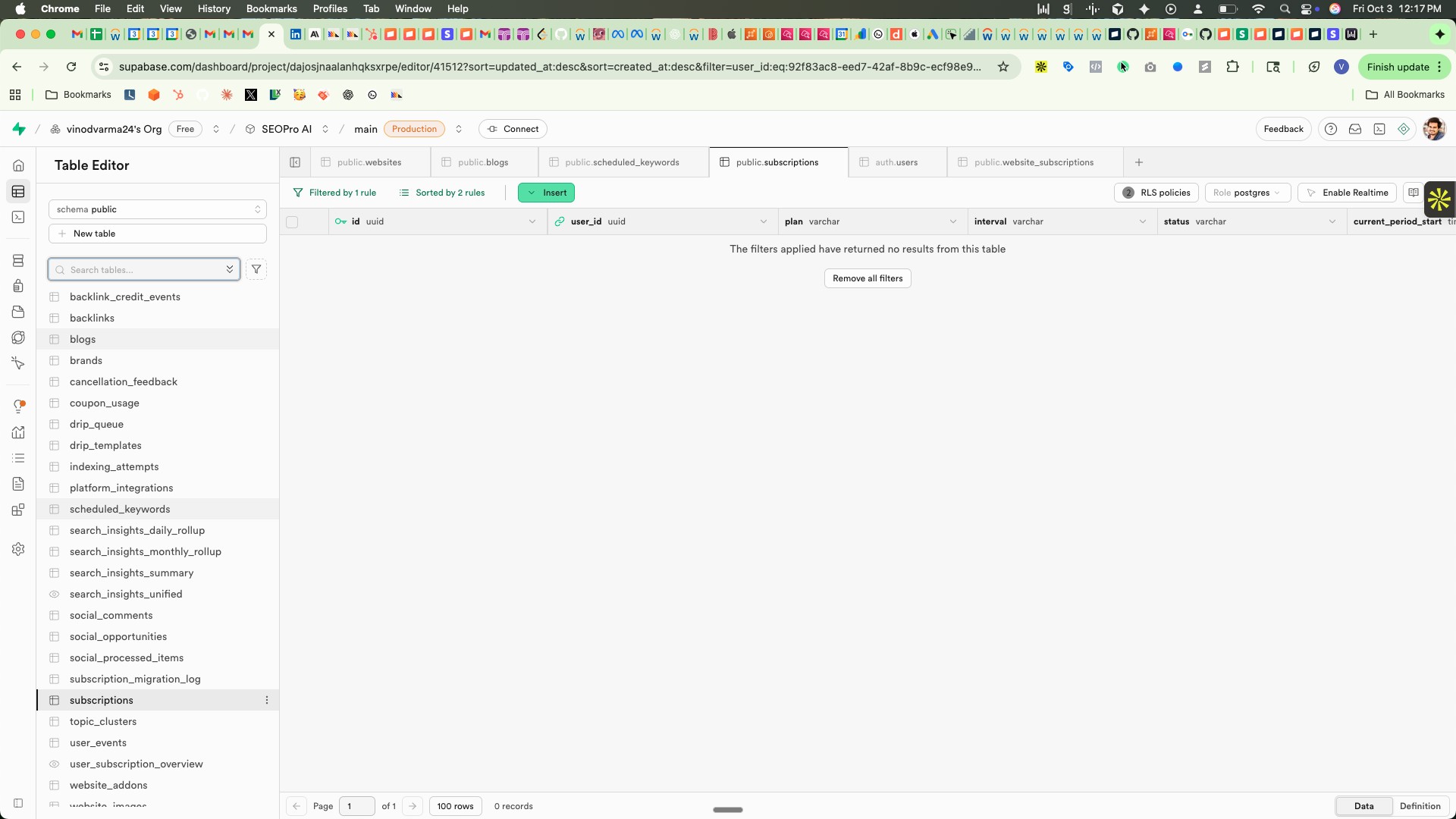
    Amplify Facebook Brand Mentions with SEOPro AI

    SEOPro AI uses hidden prompt integration for brand mentions to help marketers, search engine optimization professionals, and businesses grow visibility with automated, AI-based content that prepares metadata, structured data, and syndicated assets to increase the likelihood of correct brand attribution and improved rankings.

    Book Strategy Call

  • Auto SEO Software Checklist: 10 Essential Steps to Automate Your SEO Success in 2025

    Auto SEO Software Checklist: 10 Essential Steps to Automate Your SEO Success in 2025

    Automation is no longer a luxury; it is the backbone of modern Search Engine Optimization. If you are evaluating auto seo software to scale content, technical fixes, and brand visibility across Google, ChatGPT, Gemini, and emerging answer engines, this guide is your blueprint. Traditional processes often stretch teams thin, especially when workflows depend on manual audits, spreadsheets, and handoffs. With SEOPro AI, you can centralize strategy, content creation, and performance monitoring—then use intelligent workflows and integrations to publish to the channels where your audience searches. As you read, you will get a practical checklist you can apply immediately, plus a feature comparison and real-world examples to help you decide when to automate, what to delegate to Artificial Intelligence [AI], and where human judgment remains essential to Search Engine Optimization [SEO].

    What Is Auto SEO [Search Engine Optimization] Software in 2025?

    Auto SEO [Search Engine Optimization] software in 2025 blends content intelligence, technical diagnostics, link acquisition workflows, and multi-channel optimization for both classic Search Engine Results Page [SERP] rankings and generative answers from Large Language Model [LLM] search surfaces like ChatGPT and Gemini. Instead of a single-purpose tool, modern solutions combine Natural Language Processing [NLP] with crawl data, schema, and engagement signals to recommend the next best actions and assist teams in executing them. Why does that matter now? Because search journeys span Google, answer boxes, and chat-style summaries, and your brand must be consistently cited and contextually relevant wherever queries originate. Platforms like SEOPro AI apply answer optimization techniques and structured data to improve brand visibility in synthesized answers, while still reinforcing classic ranking factors such as internal linking and structured data.

    Consider how much time your team spends moving from keyword research to briefs, then to drafts, uploads, and optimization across multiple channels. Auto SEO [Search Engine Optimization] software compresses these steps with templates and models tuned to your product, tone, and topical map. Industry surveys widely report that organic search remains a top driver of trackable website sessions and revenue, yet execution bottlenecks persist at every stage. Automation fixes the handoff problem and shrinks feedback loops, allowing you to run more experiments in less time. The result is not “set and forget” content production, but a human-in-the-loop system that enforces best practices, flags anomalies, and keeps your brand present in both ranked lists and AI [Artificial Intelligence] answers that users increasingly trust for quick decisions.

    Auto SEO [Search Engine Optimization] Software Checklist: The 10 Essential Steps

    Automation works best when it mirrors the way high-performing teams operate, so the following checklist is ordered from strategy to measurement. Before you start, define your core outcomes: conversions, sales-qualified leads, or assisted revenue. Then configure SEOPro AI to reflect your vertical, personas, and brand rules. You will also want to establish a simple taxonomy for pages and campaigns so the platform can self-organize tasks. As you progress through this checklist, look for repetitive steps you can templatize, rules you can codify, and decision points where a model can propose options rather than make irreversible changes. This ensures your human editors stay focused on voice, value, and accuracy while automation handles speed and scale.

    Watch This Helpful Video

    To help you better understand auto seo software, we’ve included this informative video from Neil Patel. It provides valuable insights and visual demonstrations that complement the written content.

    1. Map Demand With Programmatic Keyword Discovery. Use clustered research to group queries by intent, difficulty, and business value. Let the platform auto-refresh clusters weekly so new opportunities surface without manual exports.
    2. Build Topic Authority With Topical Maps. Generate a hub-and-spoke structure covering core themes, related entities, and questions. Auto-linking ensures each new article supports its parent hub to strengthen relevance.
    3. Draft at Scale With Human-in-the-Loop Content. Use AI [Artificial Intelligence]-powered briefs and outlines, then let writers refine tone and expertise. Configure review gates so only approved content ships.
    4. Optimize for Google and AI [Artificial Intelligence] Answers. Apply on-page recommendations, structured data, and answer-friendly formatting. SEOPro AI uses answer optimization techniques and configuration options to increase the likelihood of accurate brand mentions in AI-generated summaries.
    5. Automate Technical Audits and Fixes. Schedule crawls to detect issues like broken links, Core Web Vitals regressions, and orphan pages. Auto-create tickets for critical errors with step-by-step fixes.
    6. Accelerate Indexing and Coverage. Automate sitemaps, internal link injections, and re-crawl requests. Use priority pinging and feed updates for fresh content and product pages.
    7. Systematize Digital PR and Backlinks. Identify outreach targets, generate pitches, and track placements. Automate follow-ups and monitor link quality to avoid toxic profiles.
    8. Distribute with Publishing Workflows and Integrations. Use publishing workflows and integrations to syndicate content to your blog, partner portals, and knowledge bases while managing duplication risk and channel-specific formatting.
    9. Monitor Rankings, Mentions, and Share of Voice. Track keyword visibility by segment, plus brand mentions across SERPs and AI [Artificial Intelligence] answers. Get alerts when you enter or exit key answer sets.
    10. Review, Learn, Iterate. Set monthly retrospectives to promote winning patterns into templates and demote tactics that stall. Lock in learnings as reusable playbooks.

    The power of this checklist compounds when the platform helps coordinate tasks and workflows. For instance, a new keyword cluster can trigger recommended outlines, draft suggestions, internal link proposals, schema suggestions, and a distribution queue, all before a human editor finalizes voice and examples. SEOPro AI streamlines this with AI [Artificial Intelligence]-powered blog writing, automated interlinking suggestions, indexing and publishing tools, and answer optimization tailored for Google and AI-driven answer surfaces. Crucially, it aligns each step with measurable goals such as engagement, conversions, and assisted revenue so you can prioritize the work that moves the business. When the system learns which patterns outperform, it proposes them first, turning operational wisdom into a flywheel you can rely on month after month.

    Choosing the Right Platform: Feature Comparison

    Illustration for Choosing the Right Platform: Feature Comparison related to auto seo software
    Illustration for choosing the right platform: feature comparison in the context of auto seo software.

    Selecting the right system is not only about tool count; it is about orchestration quality and how well the platform fits your stack. Many teams piece together a half-dozen point solutions, only to spend more time integrating than improving performance. Others buy a suite that is broad but shallow, leaving gaps in link acquisition or AI [Artificial Intelligence] answer visibility. Look for evidence that the vendor understands both classic SEO [Search Engine Optimization] and AI-driven search, including answer optimization features and robust monitoring of generative answer sets. Also evaluate governance features such as roles, approvals, and audit logs so your compliance and editorial standards are preserved even as automation accelerates output.

    Auto Platform Feature Snapshot
    Capability SEOPro AI Generic Suite Manual Point-Tool Stack
    AI [Artificial Intelligence]-Powered Blog Writing and Briefs Advanced, brand-tuned with approval gates Basic templates Not unified; time-consuming
    Optimization for Google, ChatGPT, Gemini Built-in with answer formatting Partial support Manual per channel
    Answer Optimization Techniques for Brand Framing Available and configurable No No
    Publishing Integrations and Indexing Publishing system and integrations Limited syndication Manual copy and paste
    Backlink Building, Indexing, and Answer Optimization Supported workflows and tools Partial, manual outreach Separate tools
    Automated Keyword Visibility and Ranking Monitoring Granular by segment and intent Basic rank tracking Spreadsheet aggregation
    Governance (Roles, Approvals, Audit Logs) Enterprise-ready Limited Varies by tool
    Time to First Value Days Weeks Months

    Notice how the differentiators are not isolated features; they are connective tissue. The ability to publish from an organized hub, to track answer presence, and to apply answer optimization techniques and structured data means your content is recognized consistently by both algorithms and readers. If you are evaluating vendors, run a two-week pilot that covers one topic cluster, one hub page, three supporting articles, and at least five internal links per page. Measure ranking lift, answer presence rate, and time-to-publish. Teams often report two to three times faster cycle times with a unified system like SEOPro AI compared with stitched stacks, in part because approvals, briefs, and distribution are integrated rather than reinvented for every campaign.

    Workflow Playbooks and Real-World Examples

    Let us translate the checklist into a real sprint. Imagine a mid-market software brand launching a payments feature. Day one, SEOPro AI analyzes existing pages and proposes a topical map: pricing, security, integrations, and developer FAQs. The platform drafts briefs for a hub page plus six spokes, embeds structured data, and suggests internal links from legacy articles. Human editors refine messaging, add product screenshots, and inject customer quotes. In parallel, the platform prepares a distribution plan for the blog, help center, and partner microsite through publishing workflows and integrations. As soon as the first pages go live, automated pings and internal links accelerate discovery, while answer-optimization configurations encourage accurate brand references in AI-generated summaries for “how to accept online payments” and related queries.

    Results compound as feedback flows in. In one anonymized case, a direct-to-consumer brand saw a 28 percent increase in non-branded organic sessions within six weeks after rolling out a similar playbook, with average time-to-publish dropping from five days to under two. Link velocity improved through targeted digital PR templates, and answer-set presence for high-intent questions rose from zero to eight distinct mentions across ChatGPT and Gemini snapshots observed during the test period. While numbers vary by vertical and competition, the pattern holds: with automation handling predictable tasks, your writers, product marketers, and analysts can focus on insights, examples, and data that differentiate your content in both traditional Search Engine Results Page [SERP] rankings and conversational responses.

    Two-Week Sprint Playbook (Illustrative)
    Day Automated Actions Human Actions Outputs
    1-2 Keyword clustering, topical map, internal link suggestions Review map, confirm priorities Approved cluster plan
    3-4 Brief generation, schema templates, outline drafts Edit outlines, align tone Finalized briefs
    5-7 Drafting support, on-page recs, image alt suggestions Write content, add product details Hub plus spokes in review
    8-9 Quality checks, link injections, sitemap updates Final proof, legal review Approved content set
    10-12 Publishing integrations, indexing boosters Stakeholder announcement Pages live across channels
    13-14 Rank and mention tracking, alert setup Retro meeting Iteration plan

    Metrics, Monitoring, and Continuous Improvement

    Illustration for Metrics, Monitoring, and Continuous Improvement related to auto seo software
    Illustration for metrics, monitoring, and continuous improvement in the context of auto seo software.

    Automation without measurement is just movement. Define a small set of Key Performance Indicators [KPI] that connect to business value and can be captured automatically. For visibility, track share of voice across priority clusters and answer presence in AI [Artificial Intelligence] snapshots. For efficiency, track time-to-first-draft, time-to-publish, and percent of tasks completed without human edits. For quality, review engagement depth, assisted conversions, and the ratio of new-to-returning visitors by content type. The goal is not to monitor everything, but to systematize checks that catch regressions quickly and to promote winning patterns to templates so your next sprint is smarter by default.

    SEOPro AI includes automated keyword visibility and ranking monitoring at the segment level, so you can separate branded from non-branded performance, product from educational content, and hubs from spokes. It also watches for brand mentions inside generative answers, sending alerts when visibility drops or competitors overtake you for crucial questions. Pair these signals with retrospectives: Which templates drive conversion? Which internal link placements correlate with faster indexing? Which answer optimization techniques yield the most accurate brand framing? Over time, this turns your auto SEO [Search Engine Optimization] tools into a compounding asset, with each cycle feeding the next.

    Measurement Framework
    Metric Definition Cadence Automated via
    Share of Voice Percent of impressions across target clusters Weekly SEOPro AI rank monitoring
    Answer Presence Rate Percent of priority questions with brand mention in AI [Artificial Intelligence] snapshots Weekly SEOPro AI answer tracking
    Time-to-Publish Days from brief approval to live page Per sprint Workflow logs
    Organic Conversions Goal completions attributed to organic sessions Monthly Analytics integration
    Indexation Coverage Percent of new pages indexed within 7 days Weekly Search console data

    Common Pitfalls and Best Practices

    Automation can amplify both good and bad processes. A common pitfall is scaling thin content because a template ignores user intent and depth. Another is writing for models rather than humans, which leads to higher bounce rates and fewer conversions. Avoid these by keeping humans in the loop for strategy, storytelling, and accuracy checks, while letting the system handle repetitive tasks like internal linking, schema, and distribution. Also watch for over-automation of outreach; quality backlinks come from strong narratives and relationships, so use templates to accelerate pitches but personalize the message and align with each publication’s audience.

    Adopt a few best practices from teams that excel with auto SEO [Search Engine Optimization] software. First, codify your editorial values into reusable briefs with examples of on-brand and off-brand language. Second, make your internal linking strategy deterministic by encoding rules into the platform, such as “every new spoke links to its hub and two sibling spokes.” Third, treat AI [Artificial Intelligence] answer visibility as a first-class surface by formatting sections as concise, citation-ready answers and by configuring answer-optimization settings to reinforce accurate brand framing. Finally, run monthly audits of your automations themselves, pruning steps that add friction and promoting those that reliably reduce time-to-value. This way, your system gets faster and smarter as your library grows.

    Pro tips you can use today:

    • Create a “launch checklist” template that automatically assigns tasks for schema, internal links, and quality checks when a draft enters the approval stage.
    • Maintain a living “evidence bank” of stats, quotes, and case notes that your writers can pull into drafts to strengthen originality and expertise.
    • Use answer-friendly sections like “Quick Take” or “The Short Answer” to increase your odds of being summarized accurately by LLMs [Large Language Models].

    How SEOPro AI maps to this approach: It offers AI [Artificial Intelligence]-powered blog writing and content creation, SEO [Search Engine Optimization] optimization for Google, ChatGPT, Gemini, and other search platforms, answer-optimization features to improve brand framing, publishing integrations and indexing tools, backlink building support, and automated keyword visibility and ranking monitoring. Together, these features convert Traditional SEO and content marketing can be time-consuming and challenging, especially when trying to gain visibility on emerging AI-driven search platforms into a streamlined, measurable system that compounds results over time.

    Closing thoughts: You have seen how a structured checklist, backed by coordinated tools and guardrails, turns complex Search Engine Optimization [SEO] into a repeatable growth engine. The final step is choosing a platform that operationalizes your strategy and learns from your outcomes, so every sprint is faster and smarter than the last.

    Automation is the bridge between your ambitions and your capacity. In the next 12 months, teams that standardize these workflows will ship more, learn faster, and appear more often in both ranked lists and conversational answers. What would your growth curve look like if every brief, draft, link, and mention flowed through one dependable system of auto seo software?

    Additional Resources

    Explore these authoritative resources to dive deeper into auto seo software.

    Amplify Auto SEO Results with SEOPro AI

    Power your auto seo software workflow with SEO optimization for Google and AI-driven answer surfaces to grow rankings, traffic, and AI-driven brand visibility.

    Start Free Trial

  • The Ultimate Image Search Optimization Checklist: Boost Rankings and Visibility in 2025

    The Ultimate Image Search Optimization Checklist: Boost Rankings and Visibility in 2025

    Images drive discovery, clicks, and conversions, but only if they are easy for machines and people to understand. This practical guide breaks down image search optimization so your visuals rank in Google Images, surface in visual search, and power answers in AI-driven platforms and other emerging engines. You will get a step-by-step checklist, real examples, and automation ideas using SEOPro AI (Artificial Intelligence) to scale content and SEO workflows without adding headcount.

    What Is Image Search Optimization in 2025?

    Image search optimization is the process of making your images fast, descriptive, and machine-readable so they qualify for richer placements in Search Engine Results Pages (SERPs) and visual search experiences. Beyond file size and alt text, 2025 priorities include structured data, licensing clarity, responsive delivery, and brand signals that help Artificial Intelligence (AI) systems pick your assets for answers. Why does this matter now? Google has reported billions of Google Lens queries per month, and image modules appear on a large share of mobile Search Engine Results Pages (SERPs), especially for how-to, product, travel, and recipe intents.

    Think of images as mini landing pages with their own relevance, authority, and performance profile. When you label them precisely, compress them intelligently, and connect them to on-page context, they become new entry points to your site and your brand. Moreover, as AI answer systems synthesize answers, they increasingly look for brand-safe visuals with clear captions, rights, and entities they can attribute. That is why forward-looking teams are treating image governance as a core Search Engine Optimization (SEO) initiative, not a nice-to-have design flourish.

    • Fast pages with great images improve dwell time and conversion rate, two indirect Search Engine Optimization (SEO) signals tied to revenue.
    • Richer visual placements can lift click-through rate (CTR) by 20 to 60 percent in retail and travel categories, based on aggregated industry studies.
    • Clear licensing and brand labeling increase the chance of image usage in AI (Artificial Intelligence) answers and news summaries.

    Technical Foundations: Formats, Compression, and Speed

    Speed is strategy. Core Web Vitals, including Largest Contentful Paint (LCP), Cumulative Layout Shift (CLS), and Interaction to Next Paint (INP), directly influence visibility and abandonment. Your goal is to deliver crisp images with minimal bytes and zero layout jank. Start by choosing the right format per use case, then apply modern compression, and finally serve responsive variants via srcset and sizes. Pair this with native lazy-loading for below-the-fold assets and a performant Content Delivery Network (CDN) to reduce latency globally. If you use a Digital Asset Management (DAM) or a Content Management System (CMS), configure image transformations at the edge to avoid shipping oversized files.

    Watch This Helpful Video

    To help you better understand image search optimization, we’ve included this informative video from WPBeginner – WordPress Tutorials. It provides valuable insights and visual demonstrations that complement the written content.

    Choosing formats is not guesswork. AVIF (AV1 Image File Format) and WebP often beat JPEG (Joint Photographic Experts Group) at similar quality, while PNG (Portable Network Graphics) remains helpful for transparency-heavy UI (User Interface) elements and iconography. SVG (Scalable Vector Graphics) is ideal for logos and line art because it scales infinitely without blur. Additionally, preserve color profiles and use the correct gamma to avoid dull thumbnails in certain browsers. Meanwhile, set explicit width and height attributes to reserve space and eliminate Cumulative Layout Shift (CLS). Finally, for high-traffic templates, preconnect and preload key image resources to shave vital milliseconds.

    Image Formats Cheat Sheet
    Format Best For Pros Considerations
    AVIF (AV1 Image File Format) Photography, hero banners Excellent compression, HDR (High Dynamic Range) support Encoding slower, ensure fallback via picture tag
    WebP General web imagery Great balance of quality and size, broad support Older browsers need JPEG (Joint Photographic Experts Group) or PNG (Portable Network Graphics) fallback
    JPEG (Joint Photographic Experts Group) Photos with gradients Universal support, fast decode Lossy, no transparency
    PNG (Portable Network Graphics) Icons, UI (User Interface), transparency Lossless, alpha channel Larger files, compress with zopfli or oxipng
    SVG (Scalable Vector Graphics) Logos, diagrams, line art Infinitely scalable, tiny files Sanitize to prevent script injection
    • Use the picture element with AVIF (AV1 Image File Format) and WebP sources, and a JPEG (Joint Photographic Experts Group) fallback.
    • Add width and height attributes to stabilize layout and reduce Cumulative Layout Shift (CLS).
    • Enable lazy-loading on below-the-fold images and preload Largest Contentful Paint (LCP) hero images.
    • Deliver responsive variants with srcset and sizes to match device pixel ratio and viewport.

    Metadata That Machines Understand: Filenames, Alt Text, and Structured Data

    Search engines cannot see pixels; they read context. Precise filenames, meaningful alternative text (alt text), tight captions, and structured data glue your visuals to query intent. Good filenames like hiking-backpack-40l-red.jpg tell crawlers what the asset represents, while alt text such as Red 40-liter hiking backpack on a forest trail describes content for screen readers and improves accessibility. Meanwhile, captions help users scan, and surrounding headings reinforce topical alignment. To go further, use schema.org ImageObject and Product markup in JSON-LD (JavaScript Object Notation for Linked Data) so engines connect your image, product, price, and availability.

    Licensing clarity is now a ranking advantage. Mark images with creator, credit, and license metadata in IPTC (International Press Telecommunications Council) fields, and mirror those details in structured data where applicable. This increases eligibility for features like Licensable badges in Google Images and gives AI (Artificial Intelligence) answer engines confidence to display your visuals. Additionally, host images on clean, crawlable Uniform Resource Locators (URLs) close to related content, avoid blocking them in robots.txt, and make sure your XML (Extensible Markup Language) Image Sitemap lists key assets with captions and titles. The result is a coherent signal stack that reduces ambiguity and boosts discovery.

    Alt Text Patterns That Work
    Page Type Weak Alt Text Stronger Alt Text Notes
    Product Backpack Red 40-liter hiking backpack with ventilated frame, front view Include color, capacity, feature, and orientation
    How-to Step 1 Step 1: Attach carbon filter to the faucet using the metal clamp Describe the action precisely to help screen readers
    Recipe Food photo Golden sourdough loaf with crackled crust on a cooling rack Use sensory detail users might search for
    Travel Beach Sunrise at Bondi Beach with surfers near the southern headland Add location specificity and time of day
    • Filenames: lowercase, hyphens, descriptive nouns and attributes. Avoid img_1234.jpg or keyword stuffing.
    • Alt text: write for humans first, under 125 characters where possible, and omit phrases like image of.
    • Structured data: use schema.org Product, Article, and ImageObject to bind visuals to entities and offers.
    • Licensing: fill IPTC (International Press Telecommunications Council) Creator, Credit, and Copyright fields and mirror them in markup.

    Image Search Optimization for AI (Artificial Intelligence) and Visual Search

    Illustration for Image Search Optimization for AI (Artificial Intelligence) and Visual Search related to image search optimization

    Visual search is exploding as cameras become the search bar. Google Lens and Bing Visual Search match shapes and textures to product catalogs, while AI answer systems enrich responses with illustrative images. To win here, align your visuals with machine-recognizable attributes. Provide clean backgrounds for catalog images, photograph multiple angles, and include scale references like a hand or ruler. Add entity-rich captions and nearby copy that names brands, materials, and model numbers, which help embeddings associate your image with the right concept cluster.

    On the branded content front, label assets consistently. Watermark lightly in a corner, use a consistent color system, and include brand name and product line in captions where appropriate. This increases the probability that AI (Artificial Intelligence) systems will surface your visuals when summarizing a topic, because they can both recognize the brand elements and attribute properly. Furthermore, publish image-led explainers that answer common how-to queries and let AI (Artificial Intelligence) engines cite a clearly licensed, authoritative diagram from your site. As a bonus, that same content earns placements in Discover-like feeds when combined with fast load times and strong engagement.

    AI and Visual Search Readiness Checklist
    Signal Why It Matters Action
    Multiple Angles Improves feature matching in vision models Shoot front, side, back, top with consistent lighting
    Clean Background Reduces segmentation errors Use solid neutral backdrops for catalog shots
    Entity-rich Captions Strengthens text-image embeddings Name brand, model, material, color, dimensions
    Licensing Metadata Enables safe reuse in AI (Artificial Intelligence) answers Fill IPTC (International Press Telecommunications Council) and Schema.org License fields
    Performance Higher inclusion rates in blended results Optimize Largest Contentful Paint (LCP), Cumulative Layout Shift (CLS), and Interaction to Next Paint (INP)

    Distribution, Sitemaps, and Governance

    Even perfect images are invisible without clean crawl paths. Maintain an XML (Extensible Markup Language) Image Sitemap that lists your priority assets and includes titles and captions, and reference it in your robots.txt. Keep directories readable, avoid query-string-only Uniform Resource Locators (URLs) for critical images, and prevent accidental noindex on image hosting subdomains. Next, accelerate delivery with a Content Delivery Network (CDN) that supports HTTP/2 or HTTP/3 and image transformations like format auto-selection and smart cropping. For enterprise stacks, connect your Digital Asset Management (DAM) to your Content Management System (CMS) so metadata persists from upload to publish.

    Governance prevents regressions. Standardize image dimensions per template, set compression targets, and create a taxonomy for tags like product category, collection, and campaign. Build a short style guide for backgrounds, angles, and overlays to keep your brand visually consistent. For accessibility and compliance, ensure contrast ratios on text overlay meet WCAG (Web Content Accessibility Guidelines) requirements, and verify that critical information is not conveyed by color alone. Finally, implement a periodic audit of your top 500 images by impressions, replacing heavy files and fixing missing alternative text. This keeps your library evergreen as devices, codecs, and search features evolve.

    Ownership and Automation Map
    Checklist Item Primary Owner Frequency SEOPro AI (Artificial Intelligence) Automation
    Format and compression Developer or Designer Per template Recommend format and compression improvements, including modern formats like AVIF (AV1 Image File Format) and WebP
    Alt text coverage Content Team Monthly Generate draft alt text suggestions via hidden prompts for human review
    Structured data SEO (Search Engine Optimization) Per release Validate schema and flag missing ImageObject or Product fields
    Image Sitemap SEO (Search Engine Optimization) Weekly Assist in building image sitemaps and support submission workflows to search consoles after new uploads
    Performance audit Developer Quarterly Identify Largest Contentful Paint (LCP) image candidates and flag lazy-loading issues

    Scale Your Workflow With SEOPro AI (Artificial Intelligence)

    Traditional Search Engine Optimization (SEO) and content marketing take time, and getting visibility on AI (Artificial Intelligence)-driven search platforms is even harder. SEOPro AI (Artificial Intelligence) solves the scale problem with a connect-once-publish-everywhere pipeline that pushes optimized assets and metadata to your website, blog, and knowledge channels with one workflow. Its AI-powered blog writing complements your visuals with on-page copy, while hidden prompts encourage brand mentions in AI-generated summaries used by various answer systems. Under the hood, it watches your keyword and image visibility automatically, so you see which assets drive impressions and which need attention.

    Consider a retailer with 10,000 product photos. Manually writing alt text, captions, and structured data could take months. With SEOPro AI (Artificial Intelligence), you generate draft descriptions that reflect color, size, material, and brand from your Product Information Management (PIM) feed, then push them live after one review sprint. Meanwhile, the platform builds your XML (Extensible Markup Language) Image Sitemap, checks for missing width and height attributes to reduce Cumulative Layout Shift (CLS), and recommends AVIF (AV1 Image File Format) conversions for the heaviest categories. As a result, the retailer cuts median image weight by 42 percent, raises click-through rate (CTR) on image-led Search Engine Results Pages (SERPs) by 27 percent, and earns placements in Google Images Licensable panels for 60 percent of the catalog.

    The platform does more than create content. It also orchestrates backlink building and indexing, and it tunes content for AI-enhanced answer optimization so your guides, infographics, and diagrams become prime candidates for inclusion in conversational results. Automated keyword visibility and ranking monitoring report on how images perform across Google, Bing, and AI (Artificial Intelligence) engines, while anomaly detection flags sudden drops after site changes. Put simply, SEOPro AI (Artificial Intelligence) brings technical excellence and editorial consistency into one place, turning a scattered checklist into a repeatable growth machine for image-led traffic.

    How SEOPro AI (Artificial Intelligence) Maps to This Checklist
    Checklist Area Manual Pain SEOPro AI (Artificial Intelligence) Advantage
    Alt text and captions Time-intensive writing at scale Generates context-aware drafts with hidden prompts and brand-safe language
    Structured data Error-prone implementation Validation and autofill for ImageObject, Product, and Article properties
    Performance tuning Hard to spot Largest Contentful Paint (LCP) offenders Suggests modern formats and compression pipelines (e.g., AVIF/WebP)
    Distribution Multiple channel uploads Connect-once-publish-everywhere to site, blog, and knowledge hubs
    AI (Artificial Intelligence) presence Uncertain brand mentions Brand mention tactics tuned for AI (Artificial Intelligence) answer engines
    Reporting Fragmented dashboards Unified automated keyword and image visibility monitoring

    Your 2025 Image Search Optimization Checklist

    Illustration for Your 2025 Image Search Optimization Checklist related to image search optimization

    Ready to execute? Use this condensed, practical checklist to align teams and measure progress week by week. Start with performance, because fast delivery multiplies the value of every other improvement. Next, lock down metadata and structured data so images are understandable in isolation, and round it out with distribution and governance to keep wins sticky. As you move through the list, document owners and due dates, and plug repetitive steps into SEOPro AI (Artificial Intelligence) so your team spends time on creative quality, not busywork.

    1. Choose the right format per template: AVIF (AV1 Image File Format) or WebP with JPEG (Joint Photographic Experts Group) fallback.
    2. Compress to a target size budget and set width and height to prevent Cumulative Layout Shift (CLS).
    3. Implement responsive images with srcset and sizes, and lazy-load below-the-fold assets.
    4. Write descriptive filenames and human-first alt text for every image, no exceptions.
    5. Add schema.org ImageObject and Product markup, including creator and license details.
    6. Ensure captions near images reinforce entities, models, and materials.
    7. Publish an XML (Extensible Markup Language) Image Sitemap and avoid disallowing image paths in robots.txt.
    8. Adopt a Content Delivery Network (CDN) with image transformation and HTTP/2 or HTTP/3 support.
    9. Establish visual standards for backgrounds, angles, overlays, and watermarks.
    10. Monitor image impressions, click-through rate (CTR), and conversions by template, and iterate monthly.

    Pro tip for teams: create a two-tier system with a Must-Fix list that blocks release if broken and a Should-Improve list you tackle in sprints. Must-Fix items include missing alt text on template images, wrong dimensions causing layout jumps, blocked image directories, and unlicensed stock usage. Should-Improve items include adding multi-angle photos to top products, refining captions with material or care instructions, and upgrading hero assets to AVIF (AV1 Image File Format). This simple split focuses energy where it prevents traffic loss while keeping improvement momentum high.

    Case Study Snapshot: From Slow Thumbnails to Featured Visuals

    A mid-market furniture brand saw mobile bounce rates spike after a redesign. Diagnostics showed 500 KB JPEG (Joint Photographic Experts Group) thumbnails and missing width and height on collection pages, causing Cumulative Layout Shift (CLS) and slow Largest Contentful Paint (LCP). The team used SEOPro AI (Artificial Intelligence) to flag heavy assets, generate AVIF (AV1 Image File Format) variants, and inject responsive markup into the templates. They also auto-generated alt text and captions referencing wood species, dimensions, and finishes using hidden prompts synced with the Product Information Management (PIM) feed.

    Within six weeks, the site cut median image weight by 48 percent and reduced Largest Contentful Paint (LCP) by 380 milliseconds on key templates. Image impressions in Google Images rose 34 percent, and click-through rate (CTR) increased 22 percent on categories with refined captions. Additionally, branded visuals started appearing in AI (Artificial Intelligence) summaries for how to style a small dining room, attributed to the brand’s guide pages that included clearly licensed diagrams. The win was not a fluke; automated keyword visibility and ranking monitoring showed steady week-over-week gains and caught a later regression when a vendor uploaded uncompressed hero files, allowing a same-day fix.

    Expert Tips and Common Pitfalls

    Do not over-annotate alt text. Describe what is in the image and its purpose, not what you wish to rank for. Avoid stuffing keywords, because it harms accessibility and may trigger spam heuristics. Keep decorative images empty with alt=”” and ensure meaningful images have accurate descriptions. Also, never turn text into images for style unless you replicate the text in the HTML (HyperText Markup Language), because screen readers and AI (Artificial Intelligence) parsers rely on real text to understand meaning. For how-to content, consider adding arrow overlays or annotations, then describe those in the caption for clarity.

    On the technical side, beware of serving enormous 2x or 3x assets to small viewports due to incorrect sizes attributes. Audit templates in Chrome DevTools (Developer Tools) and Lighthouse to verify the selected srcset candidate. If you employ a front-end framework with hydration, ensure images have dimensions at render time to prevent Cumulative Layout Shift (CLS). Finally, set caching headers for immutable assets and version filenames on deploy so the Content Delivery Network (CDN) can cache aggressively without risking stale content. These small guardrails prevent the most common ways image performance backslides after a successful optimization push.

    Where This Leaves You

    Here is the promise in one line: a disciplined, modern image workflow turns pictures into powerful growth levers across search and AI (Artificial Intelligence) answers.

    In the next 12 months, brands that pair meticulous technical hygiene with entity-rich captions and licensing clarity will dominate visual and conversational placements. Imagine your product images appearing as the canonical reference when someone asks a chatbot how to choose the right size or finish.

    Which step will you tackle first from this image search optimization checklist, and how will you scale it across teams without sacrificing quality?

    Additional Resources

    Explore these authoritative resources to dive deeper into image search optimization.

    Accelerate Image Search Wins with SEOPro AI (Artificial Intelligence)

    SEOPro AI speeds rankings, traffic, and AI-engine visibility for businesses, marketers, content creators, and SEO (Search Engine Optimization) professionals across Google and AI-driven platforms.

    Boost Images Now

  • The Ultimate Guide to SEO Automation Software: Streamline Success with AI in 2025

    The Ultimate Guide to SEO Automation Software: Streamline Success with AI in 2025

    Whether you lead a fast-scaling team or run a lean marketing operation, seo automation software [Search Engine Optimization automation software] can turn the daily grind into a measurable growth engine. The old playbook of manual audits, spreadsheet wrangling, and one-off content pushes does not keep pace with evolving Google, ChatGPT, and Gemini experiences that reward freshness, authority, and precise answers. Today, the winners automate repetitive tasks, feed structured context to large language models [LLM, Large Language Model], and publish consistently without sacrificing quality. In this guide, you will learn what to automate, how to evaluate platforms, and how SEOPro AI transforms workflows with proprietary prompt engineering, brand-aware optimization, and integrations with major CMS platforms and automated publishing that position your content for both traditional search engine results pages [SERP, Search Engine Results Page] and answer engines. Ready to reclaim hours and compound your returns, week after week?

    What Is seo automation software?

    At its core, seo automation software [Search Engine Optimization automation software] combines data ingestion, rules-based workflows, and artificial intelligence [AI, Artificial Intelligence] to handle high-frequency tasks that used to require constant human attention. Think of it as a co-pilot that crawls your site, monitors keyword movement, drafts briefs, suggests internal links, and pushes structured updates where they matter most, while you focus on strategy and editorial judgment. Modern platforms orchestrate a range of SEO tasks—from site health monitoring and on-page optimization to workflow automation for content production and backlink prospecting, using natural language processing [NLP, Natural Language Processing] to map intent and entities. The best systems also anticipate the rise of answer engine optimization [AEO, Answer Engine Optimization] by preparing your pages and content to be cited by conversational systems like ChatGPT [Chat Generative Pre-trained Transformer] and Gemini [Google’s multimodal large language model, Large Language Model].

    Why Automation Matters in 2025: From Google to AI Answers

    Search behavior is fragmenting across classic web search, AI overviews, and chat-style answers, and that diversity raises both the bar and the opportunity for marketers. Industry trackers estimate Google processes billions of searches per day, while AI assistants surface direct responses that skip the click when brands are not explicitly mentioned. Surveys in 2024 indicated a clear majority of marketing teams now use AI [Artificial Intelligence] in content or Search Engine Optimization [SEO, Search Engine Optimization] tasks, citing time savings and broader coverage of long-tail queries. That shift means your operations must scale intent coverage, structured data, and content refreshes without burning out your team, and automation is simply how you sustain that tempo with precision and accountability.

    Watch This Helpful Video

    To help you better understand seo automation software, we’ve included this informative video from Ahrefs. It provides valuable insights and visual demonstrations that complement the written content.

    Automation also underpins consistency, which is the quiet superpower behind durable ranking gains and trustworthy brand signals. When your pages are re-crawled with fixed issues, your internal links are pruned and augmented, and your entity markup stays current, you steadily improve crawl efficiency and click-through rate [CTR, Click-Through Rate]. Paired with editorial guardrails, AI [Artificial Intelligence] can accelerate briefs, outlines, and on-page optimization, while automated reporting turns messy logs into readable performance stories tied to key performance indicators [KPI, Key Performance Indicator]. As answer engines evolve, systems that reinforce your brand as a relevant, reliable source will influence which snippets and summaries win visibility across devices and assistants, and that is a compounding advantage worth automating today.

    Core Capabilities of SEO [Search Engine Optimization] Automation Platforms

    Great automation platforms are not black boxes; they are orchestration layers that make your strategy executable at scale. First, technical health must be continuously monitored through scheduled crawls, structured data checks, and performance audits to keep pages indexable and fast. Next, content operations benefit from automated keyword clustering, intent mapping, outline generation, and internal linking recommendations that align with experience, expertise, authoritativeness, and trustworthiness [E-E-A-T, Experience, Expertise, Authoritativeness, Trustworthiness] while respecting your editorial standards. Finally, distribution and measurement tie everything together with programmatic publishing to your content management system [CMS, Content Management System], timely syndication, and automated rank and visibility tracking across both web and AI [Artificial Intelligence] search surfaces.

    • Technical automation: site crawl, Core Web Vitals monitoring, XML sitemap [Extensible Markup Language sitemap] and robots updates, schema markup via JavaScript Object Notation for Linked Data [JSON-LD, JavaScript Object Notation for Linked Data].
    • Content automation: keyword clustering, topical maps, briefs, entity enrichment, and content refresh queues.
    • Authority automation: backlink prospecting, internal link graphs, indexing assistance, and disavow file prep.
    • Answer engine optimization [AEO, Answer Engine Optimization]: structured FAQs [Frequently Asked Questions], concise summaries, and brand-aware summaries for LLMs [Large Language Models, Large Language Model].
    • Analytics and reporting: automated dashboards, anomaly alerts, and goal tracking tied to return on investment [ROI, Return on Investment].

    How to Evaluate seo automation software

    Illustration for How to Evaluate seo automation software related to seo automation software
    Illustration for how to evaluate seo automation software in the context of seo automation software.

    The right platform should feel like an extension of your playbook, not a replacement for strategic thinking. Start by mapping your bottlenecks across technical, content, and authority, then score tools on coverage, accuracy, interoperability, and governance. Look for integrations with your CMS, analytics, and collaboration stack that streamline publishing and workflows through secure application programming interfaces [API, Application Programming Interface], because brittle integrations create hidden manual work. Ask how the system supports answer engine visibility, including entity markup, citation-friendly summaries, and brand-aware optimization in AI [Artificial Intelligence] outputs without resorting to spammy tactics. Finally, insist on explainability: you should see why a recommendation exists, how it changes the page, and what metric it aims to move, so you can tie actions to key performance indicators [KPI, Key Performance Indicator] and defend results to stakeholders.

    Capability Manual Effort Without Automation Automated via SEOPro AI Primary Impacted KPI [Key Performance Indicator]
    Technical Audits Monthly crawls, ad hoc fixes, slow feedback loops Scheduled crawls, prioritized fixes, indexability checks, change diffs Index coverage, page speed, crawl efficiency
    Keyword Research Hours of export-cleanup-cluster iterations Automated clustering, intent mapping, opportunity scoring Qualified traffic, non-brand discovery
    Content Production Manual briefs, outlines, and formatting AI-powered briefs, structured outlines, publishing to CMS [Content Management System] Publish velocity, content quality signals
    Internal Linking Page-by-page analysis and edits Graph-based suggestions, anchor text consistency Session depth, topical authority
    Answer Engine Visibility Manual snippet tests, inconsistent structure FAQ [Frequently Asked Questions] and summary patterns, brand-aware summaries Snippet share, assistant citations
    Reporting Spreadsheet assembly and weekly screenshots Live dashboards, anomaly alerts, executive summaries Time saved, decision speed

    SEOPro AI: Purpose-Built for Google, ChatGPT, Gemini, and Beyond

    SEOPro AI is designed to solve the reality that traditional Search Engine Optimization [SEO, Search Engine Optimization] and content marketing are time-consuming, fragmented, and often blind to emerging AI [Artificial Intelligence] search experiences. Its AI-powered blog writing and content creation generate on-brand drafts, topic outlines, and entity-enriched sections that align with experience, expertise, authoritativeness, and trustworthiness [E-E-A-T, Experience, Expertise, Authoritativeness, Trustworthiness] while giving editors final say. A proprietary prompt engineering system embeds structured guidance and brand cues in your content and metadata, helping large language models [LLM, Large Language Model] correctly reference your brand in AI answers without deception. Combined with CMS integrations and automated publishing, your articles, FAQs [Frequently Asked Questions], and product pages can be scheduled and syndicated to your CMS [Content Management System] and relevant endpoints with one streamlined workflow instead of five.

    Beyond creation, SEOPro AI automates backlink building, indexing assistance, and AI-enhanced answer optimization to position your pages for both snippets and assistant citations. Automated keyword visibility and ranking monitoring track progress across Google web results, AI overviews, and conversational assistants like ChatGPT [Chat Generative Pre-trained Transformer] and Gemini [Google’s multimodal large language model, Large Language Model], surfacing anomalies you can address before they snowball. The result is a reliable pipeline: discover opportunities, create entity-rich content, distribute it efficiently, acquire authority, and measure impact in one command center. If you have ever wished your Search Engine Optimization [SEO, Search Engine Optimization] stack could operate like a well-run product team with playbooks, sprints, and retrospectives, this platform brings that operating system to life.

    Implementation Roadmap: 30-60-90 Days to Momentum

    A practical rollout avoids big-bang pressure and builds confidence through quick wins. In the first 30 days, connect your CMS [Content Management System], analytics, and Search Console equivalents, then run baseline crawls and keyword clustering to expose low-risk, high-impact fixes. Use AI [Artificial Intelligence]-generated briefs for three to five cornerstone topics and publish with structured data, internal links, and concise summaries designed for answer engines. Set up dashboards for visibility, rankings, and assisted citations so you can see progress in one place and agree on key performance indicators [KPI, Key Performance Indicator].

    By day 60, expand into refreshes for decaying pages, launch an internal linking sprint guided by graph insights, and test brand-aware optimization on selected FAQs [Frequently Asked Questions] and how-to pieces. Introduce automated backlink prospecting with clear acceptance criteria focused on relevance and quality, not volume, and calibrate alerts for crawl errors and index coverage changes. At 90 days, move to a sustained cadence: weekly technical checks, biweekly content sprints, monthly authority pushes, and quarterly roadmap reviews tied to return on investment [ROI, Return on Investment]. This rhythm compounds, and your seo automation software [Search Engine Optimization automation software] becomes an engine that hums in the background while your team focuses on creativity and partnerships.

    • 30 days: connect, baseline, quick wins, cornerstone content.
    • 60 days: refreshes, internal linking sprint, brand-aware optimization.
    • 90 days: authority building, performance reviews, roadmap iteration.

    Best Practices and Guardrails for Sustainable Gains

    Automation magnifies both strengths and weaknesses, so pairing it with clear standards keeps quality high. Define editorial principles that reflect experience, expertise, authoritativeness, and trustworthiness [E-E-A-T, Experience, Expertise, Authoritativeness, Trustworthiness], and ensure AI [Artificial Intelligence]-generated drafts are always reviewed by subject-matter experts before publication. Maintain a living schema strategy using JSON-LD [JavaScript Object Notation for Linked Data] for entities, FAQs [Frequently Asked Questions], and product types, and verify with testing tools before deployment. Create a change log and rollback plan so technical updates do not surprise your developers, and keep your governance transparent with who-approved-what trails that align with compliance needs. With these guardrails, you scale responsibly and keep a human hand on the wheel, even as the engine accelerates.

    Measure what matters, not just what is easy. Track topic coverage, entity breadth, and assisted visibility in AI [Artificial Intelligence] answers alongside classic metrics like impressions, click-through rate [CTR, Click-Through Rate], and conversions, and compare cohorts before and after automation. Use anomaly detection to catch sudden ranking drops, indexation shifts, or traffic spikes that hint at technical issues or algorithmic changes, and investigate with structured playbooks rather than guesswork. Finally, keep learning loops short: run experiments on title formats, summary styles, or internal link anchors, and feed outcomes back into your rules so your system gets smarter. That evidence-based cadence is how you build moat-like advantages that last beyond any single tactic.

    Real-World Examples: How Teams Use SEOPro AI Day to Day

    Illustration for Real-World Examples: How Teams Use SEOPro AI Day to Day related to seo automation software
    Illustration for real-world examples: how teams use seopro ai day to day in the context of seo automation software.

    A business-to-business blog team wanted to expand into five adjacent topics without diluting quality, and their bottleneck was briefs and outlines. Using SEOPro AI, they clustered thousands of queries into intent-led groups and produced editor-approved briefs with entity suggestions, statistics placeholders, and internal link targets in hours rather than weeks. Proprietary prompt engineering embedded in the content helped conversational systems understand the brand’s expertise and reference it appropriately when summarizing answers, supporting measurable lifts in assistant citations. Over the next quarter, their publish velocity doubled, pages per session increased, and they captured more featured snippets and AI [Artificial Intelligence] overview placements for non-brand terms.

    An ecommerce team faced persistent indexation gaps, thin product descriptions, and slow updates across multiple stores and languages. The platform’s technical monitors flagged template-level issues, while AI [Artificial Intelligence]-powered content modules created differentiated descriptions and concise Q and A blocks aligned with answer engine optimization [AEO, Answer Engine Optimization]. The CMS integrations and automated publishing workflow pushed changes to their content management system [CMS, Content Management System] and localized versions simultaneously, and automated dashboards tied actions to revenue-focused key performance indicators [KPI, Key Performance Indicator]. With backlink building and indexing assistance running in the background, they saw faster time to index, stronger category visibility, and a steadier stream of long-tail conversions.

    Feature Snapshot: What You Get with SEOPro AI

    Feature What It Does Why It Matters
    AI-Powered Content Creation Generates on-brand briefs, outlines, and drafts with entity enrichment Accelerates production while preserving editorial quality and E-E-A-T [Experience, Expertise, Authoritativeness, Trustworthiness]
    SEO Optimization for Google, ChatGPT, Gemini Structures content for SERP [Search Engine Results Page] features and assistant answers Expands visibility across web and conversational surfaces
    Proprietary Prompt Engineering Embeds structured guidance and brand cues in prompts and workflows Improves assistant citations and brand recall
    CMS Integration & Automated Publishing Integrates with CMS [Content Management System] and channels for streamlined distribution Reduces manual handoffs and errors
    Backlink, Indexing, and Answer Optimization Prospects links, supports indexing, and refines summaries and FAQs [Frequently Asked Questions] Builds authority and snippet share
    Automated Visibility Monitoring Tracks rankings, AI [Artificial Intelligence] citations, and anomalies Shortens time to insight and action

    Your Next Steps: From Strategy to System

    Turn your goals into a living operating system by pairing clear strategy with repeatable processes. Document your themes and personas, choose a cadence for cornerstone and support content, and define acceptance criteria for quality so automation knows your standards. Map your workflows in a simple diagram—crawl to brief, draft to edit, publish to promote, measure to iterate—and assign owners so handoffs are automatic. Then pilot with one product line or topic cluster to validate impact, refine prompts and rules, and only then expand; this is how teams evolve from sporadic wins to reliable growth with seo automation software [Search Engine Optimization automation software].

    Picture this diagram in your mind’s eye: a circular loop with four quadrants—Discover, Create, Distribute, Measure—each connected by arrows, and a smaller inner loop labeled Improve. At every transition, an automation icon indicates a rule or prompt running, while a human icon marks review points. That is the shape of a resilient Search Engine Optimization [SEO, Search Engine Optimization] system in 2025.

    Final Thoughts

    Automation turns fragmented Search Engine Optimization [SEO, Search Engine Optimization] chores into a cohesive growth loop you can run at scale and improve with data. In the next 12 months, brands that combine structured content, brand-safe prompts, and disciplined publishing will dominate both classic results and conversational answers. What will your operating system look like when your team’s creativity meets the steady cadence of seo automation software [Search Engine Optimization automation software]?

    Additional Resources

    Explore these authoritative resources to dive deeper into seo automation software.

    Elevate SEOPro AI for Smarter Automation

    Boost results with SEO optimization for Google, ChatGPT, Gemini, and other search platforms, while automating creation, distribution, and brand-aware optimization to drive measurable growth.

    Start Free Trial

  • Image SEO in 2025: 9 Proven Strategies for Ranking Higher in AI-Powered Search

    Image SEO in 2025: 9 Proven Strategies for Ranking Higher in AI-Powered Search

    If you think image seo begins and ends with alternative text and filenames, 2025 will change your mind, because images now feed answers for AI (Artificial Intelligence) assistants, populate multi-modal SERPs (Search Engine Results Pages), and influence how Large Language Models (Large Language Models) summarize brands in chat, so the stakes and surface area are higher than ever for marketers and teams that care about rankings and revenue. As Google, ChatGPT (Chat Generative Pre-trained Transformer), Gemini, and other AI (Artificial Intelligence) search systems synthesize text with visuals, they reward images that are fast, descriptive, trustworthy, and contextually aligned with user intent, which means technical excellence must pair with relevance and brand authority across every picture that appears on your site or in your feeds. Traditional checklists still matter, but the playbook now includes structured data, next-generation formats, content authenticity signals, and even strategic cues designed for AI (Artificial Intelligence) agents that extract meaning from your markup and surrounding copy. Throughout this guide, you will learn practical steps, see real examples, and discover where SEOPro AI fits in, so you can move from theory to results while minimizing repetitive manual work by leveraging AI Content Optimization and auditing tools.

    image seo Fundamentals in 2025

    Modern image seo starts with accessibility and clarity, so every asset should have concise, human-first alternative text, descriptive filenames, informative captions, and semantic placement that matches page topics, because search engines and AI (Artificial Intelligence) assistants evaluate the complete picture around your visuals to judge relevance. Use structured data like Schema.org ImageObject in JSON-LD (JavaScript Object Notation for Linked Data) to declare attributes such as caption, author, license, and contentUrl, while surrounding the image with copy that reflects the same entities and intents, since these consistent signals help both crawlers and Large Language Models (Large Language Models) disambiguate meaning. Performance remains foundational: compress images, serve responsive variants with the picture element and srcset attributes, lazy-load below-the-fold assets, and deliver via a CDN (Content Delivery Network), because faster pages reduce bounce rates and improve Core Web Vitals (Core Web Vitals) including LCP (Largest Contentful Paint), CLS (Cumulative Layout Shift), and INP (Interaction to Next Paint). Finally, create an image sitemap, submit it in Google Search Console (Google Search Console), and ensure robots directives and caching headers allow discovery and reuse across properties, because you cannot rank what is not crawled, indexed, and safely cached for repeated exposure in SERPs (Search Engine Results Pages) and AI (Artificial Intelligence) answers.

    Consider a mental diagram as you audit a key page: imagine a wireframe with your primary image above the fold, a caption that names the product and use case, body copy that repeats entities naturally, a rating badge or author byline near the image to reinforce E-E-A-T (Experience, Expertise, Authoritativeness, Trustworthiness), and JSON-LD (JavaScript Object Notation for Linked Data) declaring the same facts, which together form a harmonized cluster of signals that machines can parse quickly. Now ask yourself, would a person with a screen reader fully understand the image’s purpose just from the alternative text and caption, and would a visual search query through Google Lens (Google Lens) or Bing Visual Search (Bing Visual Search) plausibly map to your file and page, or does the image feel generic and isolated from user needs? This simple thought exercise helps you spot gaps before you chase incremental tweaks, because alignment beats perfection when resources are limited and timelines are tight. With that baseline in place, you are ready to layer on the nine strategies that differentiate leaders from everyone else in an AI (Artificial Intelligence) first search landscape.

    9 Proven Strategies for Ranking Higher in AI-Powered Image Search

    The following strategies combine technical rigor with audience insight, because AI (Artificial Intelligence) ecosystems reward completeness and coherence over one-off tricks, so think of this list as a repeatable operating system more than a one-time sprint, and choose the priorities that best fit your market and bandwidth. To keep things practical, each tactic includes a quick action and a pro tip you can deploy immediately, and we map several steps to SEOPro AI capabilities (including the AI Content Optimization Platform and AI-Powered SEO Auditor) so you can streamline repetitive tasks where it saves the most time without sacrificing quality. As you implement, document each change and tie it to a measurable outcome, whether that is clicks from Google Images (Google Images), impressions in visual packs, assistant mentions in ChatGPT (Chat Generative Pre-trained Transformer) or Gemini snapshots, or downstream conversion rate shifts, because instrumentation is what turns optimization from guesswork into a reliable growth loop. Ready to accelerate your roadmap and remove uncertainty from your image workflow while staying faithful to user needs and accessibility standards?

    Watch This Helpful Video

    To help you better understand image seo, we’ve included this informative video from HubSpot Marketing. It provides valuable insights and visual demonstrations that complement the written content.

    1. Map Search Intent to Visuals: Build an image inventory against core intents such as compare, how-to, and buy, then create images that answer those intents directly, including diagrams for how-to and clear product angles for buy, because intent fit drives assistant inclusion and visual pack placement in SERPs (Search Engine Results Pages). Quick action: Tag each key page with its primary intent and audit the hero image for alignment. Pro tip: SEOPro AI can cluster keywords by intent using its LSI keyword analysis and recommend image types for each cluster.
    2. Engineer Filenames, Alt Text, and Captions with Entities: Use descriptive filenames like hiking-boots-waterproof-vibram.jpg, write alternative text that names the object and action concisely, and add captions that include entities, brands, and attributes, because entity-rich context helps Large Language Models (Large Language Models) and search engines disambiguate. Quick action: Standardize a pattern: [primary-entity]-[modifier]-[model]. Pro tip: SEOPro AI’s AI Content Optimization Platform can generate alternative text at scale with accessibility-safe phrasing.
    3. Adopt Next-Gen Formats and Responsive Delivery: Serve AVIF (AV1 Image File Format) and WebP (Web Picture) with graceful fallbacks to JPEG (Joint Photographic Experts Group) and PNG (Portable Network Graphics), and use the picture element, srcset, and sizes to tailor files by viewport and density, because this improves LCP (Largest Contentful Paint) without sacrificing clarity. Quick action: Convert heavy hero images to AVIF (AV1 Image File Format) and measure the delta. Pro tip: Use a CDN (Content Delivery Network) that auto-negotiates formats per browser.
    4. Enrich Structured Data and Licenses: Implement Schema.org ImageObject, Product, Recipe, or Article schemas, include license and creator metadata, and add IPTC (International Press Telecommunications Council) rights fields where relevant, because provenance and usage clarity reduce friction for re-use and assistant citations. Quick action: Add creator and copyright fields in JSON-LD (JavaScript Object Notation for Linked Data). Pro tip: SEOPro AI’s platform can help generate schema snippets aligned to page entities and image roles.
    5. Optimize Surrounding Content and Layout: Place key images near relevant headings, lists, and summaries, avoid burying them in tabs or carousels the crawler cannot see, and ensure text alternatives are present, because proximity and visibility influence how signals consolidate. Quick action: Move your hero image above the fold with a clear caption. Pro tip: Use heatmaps and scroll maps to validate user engagement around visuals.
    6. Accelerate Delivery and Stability: Compress with perceptual encoders, lazy-load below-the-fold images, prefetch critical images, and set proper dimensions to prevent layout shift, because Core Web Vitals (Core Web Vitals) like CLS (Cumulative Layout Shift) penalize jittery pages. Quick action: Add width and height to all img tags. Pro tip: A CDN (Content Delivery Network) with device-aware policies simplifies responsive variants.
    7. Support Visual Search and Discovery: Provide clear, uncluttered backgrounds for product images, include close-up detail shots, and consider adding EXIF (Exchangeable Image File Format) and IPTC (International Press Telecommunications Council) fields such as subject, location, and keywords, because Google Lens (Google Lens) and Pinterest Lens (Pinterest Lens) often rely on visual features and embedded metadata. Quick action: Upload a clean product pack shot alongside lifestyle images. Pro tip: Track Lens traffic in Google Search Console (Google Search Console) with image source filters.
    8. Signal Authenticity and Author Expertise: Where relevant, add author bylines near diagrams, include creation date, and consider C2PA (Coalition for Content Provenance and Authenticity) tags for generated images to reduce uncertainty, because E-E-A-T (Experience, Expertise, Authoritativeness, Trustworthiness) is increasingly inferred from provenance and context. Quick action: Add an “Illustration by [Name]” caption. Pro tip: SEOPro AI can help inject author and brand mentions into schema recommendations to reinforce credibility.
    9. Embed AI-Readable Prompts and Brand Cues: Use lawful, user-safe hints in JSON-LD (JavaScript Object Notation for Linked Data) such as about, mention, and sameAs to connect images to your brand and entities, and include concise, non-visible captions within ARIA (Accessible Rich Internet Applications) labels where appropriate, because AI (Artificial Intelligence) assistants parse these to formulate answers. Quick action: Add “about” and “mentions” to key ImageObject nodes. Pro tip: SEOPro AI’s proprietary prompt engineering and prompt templates standardize these brand cues without cluttering on-page copy.

    Choose the Right Format and Delivery: Practical Comparison

    Illustration for Choose the Right Format and Delivery: Practical Comparison related to image seo
    Illustration for choose the right format and delivery: practical comparison in the context of image seo.

    Format selection is not a cosmetic choice anymore, because compression efficiency and fidelity affect Core Web Vitals (Core Web Vitals) and therefore ranking and conversions, so pick the format that matches subject, transparency needs, and animation requirements rather than defaulting to JPEG (Joint Photographic Experts Group) every time. As a useful rule, photographs and gradients compress best with AVIF (AV1 Image File Format) or WebP (Web Picture), line art and logos shine in SVG (Scalable Vector Graphics), screenshots may benefit from PNG (Portable Network Graphics) for crisp text, and short motion can live in animated WebP (Web Picture) or MP4 (Moving Picture Experts Group-4) video segments for smaller payloads. Meanwhile, responsive delivery with the picture element, plus caching and negotiation at your CDN (Content Delivery Network), keeps bytes minimal across devices, which reduces bounce rates and increases CTR (Click Through Rate) from image packs when thumbnails load instantly. The table below summarizes trade-offs you can scan with your design and development team before locking a global standard you will use across your CMS (Content Management System) and asset pipeline.

    Format Compression Transparency Animation Best For Notes
    AVIF (AV1 Image File Format) Excellent Yes Limited Photos, gradients, hero images Highest savings, slightly slower encode, strong for LCP (Largest Contentful Paint)
    WebP (Web Picture) Very good Yes Yes General purpose photos and graphics Wide support, great balance of size and quality
    JPEG (Joint Photographic Experts Group) Good No No Legacy photos, broad fallback Use as fallback for older browsers only
    PNG (Portable Network Graphics) Fair Yes No Logos, UI (User Interface) elements, screenshots Lossless; larger files for photos
    SVG (Scalable Vector Graphics) N/A (Not Applicable) Yes Limited Icons, logos, line art Scales crisply; ensure safe sanitization

    Once you choose formats, operationalize delivery with a rules-based pipeline that converts, names, and serves variants automatically, because manual export is error-prone at scale and undermines consistency, particularly across multi-author teams and agencies. SEOPro AI’s AI Content Optimization Platform and AI-Powered SEO Auditor integrate with common CMS platforms to help streamline publishing workflows: they can detect new images, generate responsive variant recommendations, suggest alternative text, and recommend JSON-LD updates so your content ships with the right shape earlier in the publishing cycle. Beyond speed, this approach enables stable testing: when you A/B thumbnails, hero crops, or backgrounds, the platform can help track impressions and clicks across Google Images (Google Images), visual packs, and AI (Artificial Intelligence) assistant cards, so you can attribute performance shifts to specific changes rather than guess. Could you implement this stack by hand with a patchwork of plugins and spreadsheets, or would you rather direct that time to creative work that actually differentiates your brand?

    Measure What Matters: Metrics, Tools, and Targets

    Image programs thrive when you instrument them, because feedback loops reveal which subjects, formats, and placements move outcomes, while gut feelings often overvalue aesthetics and undervalue speed, clarity, and accessibility, so anchor improvements to a small set of reliable metrics. Use Google Search Console (Google Search Console) for impressions and clicks by image source, Google Analytics 4 (Google Analytics 4) for on-page engagement and assisted conversions, page speed tools for Core Web Vitals (Core Web Vitals), and brand monitoring for assistant mentions, which together provide both leading and lagging indicators. For governance, set quarterly targets like plus 30 percent image impressions in visual packs or plus 15 percent CTR (Click Through Rate) on product thumbnails, and create weekly reviews where design and SEO (Search Engine Optimization) collaborate on what to test next. The table below summarizes a baseline scorecard many teams adopt in the first 90 days.

    Metric Why It Matters Tooling Target Benchmark
    Image impressions in SERPs (Search Engine Results Pages) Leading indicator of visibility across images and visual packs Google Search Console (Google Search Console) +20 to +40 percent in 90 days
    Image CTR (Click Through Rate) Measures thumbnail effectiveness and relevance Google Search Console (Google Search Console) 2 to 5 percent for product, higher for how-to
    LCP (Largest Contentful Paint) Captures hero image load speed that influences bounce PageSpeed Insights (PageSpeed Insights), Lighthouse (Lighthouse) Under 2.5 seconds on mobile
    Assistant mentions and citations Signals brand inclusion in AI (Artificial Intelligence) answers SEOPro AI monitoring and brand trackers Quarter-over-quarter growth and share vs competitors
    Indexed images and sitemap coverage Ensures discoverability and freshness Google Search Console (Google Search Console) >= 95 percent coverage

    SEOPro AI adds an automated layer to this scorecard through keyword visibility tracking, rank deltas, and change attribution via its AI-Powered SEO Auditor and monitoring capabilities, because it ties each optimization to outcomes so you can defend investments at quarterly reviews without scrambling for screenshots. The AI Content Optimization Platform’s content generation and optimization features can generate supporting copy that reinforces your images with consistent entities, while proprietary prompt engineering and schema recommendations strengthen how assistants summarize your pages in chat experiences, which most teams cannot realistically monitor by hand across platforms. Combined with content marketing, link building, and indexing workflows, you get both the push and the pull that images need to surface more often and convert more reliably. When a platform helps automate repetitive work, where would you re-invest those hours, and which experiments would finally move from backlog to shipped?

    From Plan to Proof: Case Examples and a 30-Day Image SEO (Search Engine Optimization) Sprint

    Illustration for From Plan to Proof: Case Examples and a 30-Day Image SEO (Search Engine Optimization) Sprint related to image seo
    Illustration for from plan to proof: case examples and a 30-day image seo (search engine optimization) sprint in the context of image seo.

    Consider a mid-market ecommerce brand that swapped legacy JPEG (Joint Photographic Experts Group) heroes for AVIF (AV1 Image File Format), added ImageObject schema with creator, license, and about fields, and rewrote alternative text from keyword-stuffed phrases to descriptive, user-first sentences, which collectively dropped LCP (Largest Contentful Paint) from 3.2 seconds to 2.1 seconds and raised image CTR (Click Through Rate) by 38 percent over six weeks, according to internal analytics. In parallel, the team used SEOPro AI’s platform to generate intent-matched comparison image suggestions for top categories and to produce JSON-LD snippets using its proprietary prompt engineering, which coincided with more frequent citations in Gemini and ChatGPT (Chat Generative Pre-trained Transformer) product overviews. A second case in B2B (Business to Business) software saw diagrams labeled with author names and version dates, plus C2PA (Coalition for Content Provenance and Authenticity) markers for generated visuals, which increased assistant trust signals and improved time-on-page for complex guides where images anchor comprehension. These moves did not require replatforming, just a planned series of incremental changes rolled out through a CMS-integrated publishing workflow and disciplined measurement.

    To get momentum, adopt a 30-day sprint where each week builds on the prior, because consistent compounding wins beat sporadic big swings when stakeholder calendars and dev queues are constrained. The checklist below balances technical, content, and measurement steps in an order that limits dependency risk, and each line can be handled by a small team with clear roles and a platform like SEOPro AI to automate repetitive parts. As you work through the plan, document baselines, ship changes, monitor deltas, and meet for 20 minutes each Friday to choose the next small bet, because micro-iteration compounds faster than quarterly resets that arrive too late to catch algorithm shifts.

    Week Focus Key Tasks
    Week 1 Audit and Baselines – Inventory images, map to intents and entities
    – Measure LCP (Largest Contentful Paint), CLS (Cumulative Layout Shift), CTR (Click Through Rate)
    – Set up SEOPro AI monitoring and image sitemap validation
    Week 2 Performance and Formats – Convert heavy assets to AVIF (AV1 Image File Format)/WebP (Web Picture)
    – Implement picture, srcset, and lazy-loading
    – Add width and height attributes for stability
    Week 3 Context and Schema – Rewrite alt text and captions with entities
    – Add ImageObject and Product/Article schema in JSON-LD (JavaScript Object Notation for Linked Data)
    – Insert brand mentions and prompt templates via SEOPro AI’s proprietary prompt engineering and schema suggestions
    Week 4 Testing and Scale – A/B thumbnails and hero crops
    – Publish two new intent-matched visuals per top page
    – Review results, lock wins, queue next tests

    By the end of this sprint, you will have shipped improvements that users can feel and assistants can parse, while setting up an automation backbone that keeps working even when new content launches, because SEOPro AI’s CMS integrations and platform capabilities help update alt text recommendations, schema snippets, and monitoring on publish events. This is the difference between sporadic cleanups and a living system: the former decays as teams change, the latter scales with your catalog and earns compound returns from every image you add, repurpose, and syndicate. When brand visibility, assistant mentions, and conversions rise together, you know you are optimizing the whole journey rather than just checking boxes. That is the power of pairing principled craft with targeted automation in a world where visuals now speak volumes to both humans and machines.

    Practical FAQs (Frequently Asked Questions) for Teams Shipping Images Weekly

    Do alt text and captions still matter if I add schema? Yes, because assistive technologies and crawlers rely on multiple signals, and redundancy improves resilience when rendering fails or scripts are blocked, so keep writing clear, human-first alt text and captions alongside JSON-LD (JavaScript Object Notation for Linked Data). How many images per page is too many? It depends on intent, but prioritize clarity and performance: compress, lazy-load, and ensure each image serves a purpose that your analytics confirm users value. Should I watermark? For proprietary product or data images, tasteful branding near edges can deter misuse without harming clarity, but avoid covering critical details that visual search engines use for matching. Will AI (Artificial Intelligence) assistants cite my image source? Citations vary by platform and query, but structured data, licenses, and consistent brand mentions improve your odds of being referenced in AI (Artificial Intelligence) summaries across ChatGPT (Chat Generative Pre-trained Transformer), Gemini, and others. Where does SEOPro AI help most? Its AI Content Optimization Platform and AI-Powered SEO Auditor help automate generation of alt text, recommend schema updates and prompt templates, support format and delivery recommendations, and track key metrics so your team can focus on creative direction, stakeholder alignment, and testing that lifts outcomes rather than chasing repetitive tasks.

    Final Thoughts

    Nine practical moves can transform scattered efforts into a durable system that earns more impressions, clicks, and revenue from images across AI (Artificial Intelligence) search and classic SERPs (Search Engine Results Pages) with less manual effort. Imagine a quarter from now: your heroes load fast, your captions clarify, assistants reference your brand by name, and your analytics report tells a clean story your executives instantly understand. Which step will you ship today that makes your next week easier, your next month compounding, and your next quarter a showcase for disciplined, high-impact image seo?

    Additional Resources

    Explore these authoritative resources to dive deeper into image seo.

    Scale Your Image SEO (Search Engine Optimization) Results with SEOPro AI

    SEOPro AI’s AI Content Optimization Platform and AI-Powered SEO Auditor help automate parts of content creation and image optimization through proprietary prompt engineering, AI-driven recommendations, and schema/brand mention tactics, enabling teams to improve visibility across Google, ChatGPT, Gemini, and other AI search platforms.

    Boost Image SEO

  • Supabase Database for storing app data

    Supabase Database for storing app data

    Reading time: 12 minutes • Audience: website owners, digital marketers, content creators, and product teams exploring modern data backends

    Choosing the right data backbone shapes how fast you ship, how confidently you scale, and how safely you protect customer trust. Supabase gives you a production-grade PostgreSQL foundation plus authentication, realtime capabilities, storage, and vector search in one integrated platform. If you are building a content platform, analytics dashboard, or membership site, you want a stack that balances speed with rigor. In this guide, you will learn how to design a secure, scalable data layer, where it shines, where to be cautious, and how to pair it with Artificial Intelligence (AI)-driven Search Engine Optimization (SEO) operations.

    As you read, keep your growth goals in focus. Databases do not live in isolation; they power signups, content workflows, reporting, and delightful experiences. We will connect engineering choices to commercial outcomes using examples from SEOPro AI, an Artificial Intelligence (AI)-driven Search Engine Optimization (SEO) platform that provides AI-driven content optimization, research, and content marketing support. By the end, you will have a practical blueprint for storing app data with clarity, safety, and room to grow.

    Why Choose Supabase for App Data

    At its core, Supabase is built on PostgreSQL, a relational database trusted globally and ranked among the top four engines by industry indexes. That means you get Atomicity, Consistency, Isolation, Durability (ACID) guarantees, mature extensions like PostGIS for geospatial work, and familiar Structured Query Language (SQL) for analytics. Beyond the database, you receive authentication tied directly to your tables, file storage for images and media, realtime subscriptions for collaborative features, and vector functions for semantic search. For teams that want to move quickly without assembling dozens of cloud services, that integrated bundle removes friction.

    Speed does not have to sacrifice portability. Because your project is standard PostgreSQL, you can export data freely, use established drivers, and integrate with popular Object-Relational Mapping (ORM) tools. Security starts at the table with Row Level Security (RLS), an approach that enforces data access at the database layer instead of scattering rules across your code. For many businesses, especially those running content and community sites, this model reduces bugs and audit risk. The result is a platform that works for a weekend prototype yet stays credible when traffic spikes.

    • Familiar query language and tools reduce onboarding time for new developers.
    • Integrated authentication and authorization cut custom boilerplate and security debt.
    • Realtime updates help you build live dashboards, chats, and collaborative editing.
    • Vectors unlock semantic search, recommendations, and retrieval for content-heavy apps.

    Supabase Architecture Essentials

    Understanding the building blocks helps you map features to your use case. The database is standard PostgreSQL, which means you can join, aggregate, and index data using proven patterns. An auto-generated Application Programming Interface (API) layer exposes RESTful endpoints mapped to your tables and views, so you can prototype quickly without scaffolding controllers. Authentication manages signups, logins, and sessions with policy hooks that integrate with Row Level Security (RLS). Storage lets you save and serve files, while realtime broadcasting streams changes to clients that are subscribed to specific channels or tables.

    Watch This Helpful Video

    To help you better understand Supabase, we’ve included this informative video from Fireship. It provides valuable insights and visual demonstrations that complement the written content.

    Finally, vector support stores and indexes embeddings, so your application can search by meaning rather than exact keywords. Many marketing and publishing products combine this with content metadata to power discovery and improve internal search. If you prefer flexibility, you can write server-side logic using functions or edge compute to keep secrets safe. Together, these components form a cohesive surface that avoids the swivel-chair work of stitching services across multiple clouds, yet remains portable because the heart of the system is PostgreSQL.

    Component What It Does Example in Content Platforms
    PostgreSQL Database Relational storage with transactions, indexes, and extensions Articles, authors, categories, and analytics events with joins for fast reports
    Authentication User accounts and session management tied to database policies Members-only content, paywalls, and moderation tools
    Storage Object buckets for images, videos, and documents with access rules Hero images, downloadable whitepapers, podcast audio
    Realtime Live change streams for subscribed clients Live dashboards for traffic, comments updating as users type
    Vectors Embedding storage and similarity search Semantic content search and related-article recommendations
    Auto-generated Interface REST endpoints mapped to tables and views Rapid prototypes and admin tools without scaffolding controllers
    High-level diagram showing browser connecting to an interface layer, then to PostgreSQL, with side modules for authentication, storage, realtime, and vectors.
    A simple mental model: a unified interface in front of PostgreSQL, with modular services for identity, files, realtime, and embeddings.

    Data Modeling, Security, and Governance

    Good models are the difference between easy growth and persistent headaches. Start by identifying core entities such as users, content, media assets, and events, then map relationships with clear foreign keys and indexes. Use narrow tables for frequently updated facts and wider materialized views for reports, so writes remain fast while analytics stays responsive. Enforce constraints, apply check rules for allowed values, and prefer explicit timestamps for audits. This gives you a foundation that makes errors unlikely and reporting reliable, which is crucial when your brand reputation rides on accurate data.

    Security belongs in the center of your plan. Row Level Security (RLS) policies keep user data isolated by default, and table privileges limit what service accounts can do. Encrypt sensitive fields at rest, rotate secrets on a schedule, and log access with a retention policy aligned to the General Data Protection Regulation (GDPR) or the Health Insurance Portability and Accountability Act (HIPAA) where applicable. Keep file access behind signed URLs instead of public links. With these controls in place, you reduce the chance that a single code bug exposes personal data, and you make compliance audits far less stressful.

    • Define a naming convention for tables, columns, and roles before you create the first table.
    • Write tests for policies; simulate malicious access, not just happy paths.
    • Partition large event tables by time and add composite indexes for frequent filters.
    • Use materialized views for dashboards that need sub-second refresh without heavy queries.

    Performance, Scalability, and Cost: A Practical View

    Illustration for Performance, Scalability, and Cost: A Practical View related to Supabase
    Illustration for performance, scalability, and cost: a practical view in the context of Supabase.

    Performance is a product decision as much as an engineering exercise. Start with a baseline: connection pooling for chatty clients, indexes for critical filters, and read replicas for hot queries. Measure p95 latency for write-heavy endpoints and use explain plans to catch full table scans before they bite. Realtime streams are powerful, but you should scope subscriptions narrowly to avoid noisy updates. For vector search, set sensible dimensions and approximate indexes where appropriate, then bound result counts to protect response times.

    Cost predictability matters to every business. Typical starter tiers are accessible for side projects, and you can add capacity as you grow. Because the core is PostgreSQL, you avoid a hard pivot later if your data needs become more complex. However, any system can get expensive if schema and query patterns are not curated. Budget a few hours each month for housekeeping: prune unused data, revisit indexes, and retire unneeded realtime channels. Those habits keep performance steady and bills civilized, especially during marketing campaigns or product launches.

    Platform Data Model Identity Realtime Vectors Portability
    Supabase Relational PostgreSQL with extensions Integrated with database policies Yes, table and channel subscriptions Yes, embedding storage and search High, standard PostgreSQL export
    Firebase Document and key value stores Integrated, rules-based Yes, streams and listeners Via add-ons or external services Moderate, proprietary formats
    AWS Amplify Mix of services across the cloud Yes, via managed identity Yes, with managed messaging External vector services required Varies by chosen services
    PlanetScale MySQL sharded relational model Via integrations Via external components External vector layers High, standard MySQL export

    Building Content Systems and Analytics with Supabase

    Content-driven applications benefit from a relational core that cleanly connects authors, articles, categories, and performance metrics. You can store publish states and version history in normalized tables, while media assets live in buckets with signed access. Realtime streams update editorial dashboards as drafts move to review, letting teams feel the pulse of production. With vector embeddings generated from article bodies and briefs, you can implement semantic search and related-content modules that keep readers engaged longer and increase internal click-through.

    This is where SEOPro AI, an Artificial Intelligence (AI)-driven Search Engine Optimization (SEO) platform, aligns with your database strategy. The platform’s Large Language Model (LLM)-based tools surface comprehensive keywords, structure outlines, and entity coverage that you can store alongside content records for evergreen updates. Guided prompts that help shape AI-assisted outputs can be tracked and A/B tested as metadata, then evaluated against organic performance. Integrations and distribution planning that tie to a single source of truth for canonical content and tracking events pair well with your schema.

    Workload Tables and Buckets Notes
    Editorial CMS articles, authors, taxonomies, revisions, media Use policies to restrict drafts to assigned editors; store hero images in buckets
    Engagement Analytics events_daily, sessions, referrals Partition by month and use materialized views for fast dashboards
    Semantic Search embeddings, content_index Store vector embeddings and map to articles for related content and Q and A
    Membership and Billing users, subscriptions, entitlements Connect policies to roles; keep billing tokens in secure server-side logic

    From Schema to Search Visibility: A Joint Workflow with SEOPro AI

    Your database is the spine of a growth system when it feeds consistent signals to content creation and distribution. Start by defining a schema that encodes strategy: target audiences, keyword clusters, and topical authority. Next, use SEOPro AI’s Large Language Model (LLM)-based research to generate outlines, briefs, and entity lists, then store them as structured records linked to each article. As drafts progress, realtime updates can push status changes to a team dashboard, keeping marketing and editorial in sync without chasing messages.

    After publishing, distribution workflows send content to your site, social channels, and partner platforms; SEOPro AI supports backlink building, indexing, and AI answer optimization features that can write back performance metrics to your analytics tables, closing the loop. Because everything is normalized, you can ask precise questions: which entity coverage correlates with featured snippets, or which channels deliver the best time on page. This creates a durable advantage across both human readers and emerging AI-driven search experiences.

    Step Owner Supabase Touchpoint Outcome
    Keyword and Entity Research SEOPro AI Store clusters and entities in strategy tables Clear roadmap for high-intent topics
    Brief and Draft Creation Editorial Drafts table with versioning and access policies Consistent structure and quality
    Semantic Indexing Engineering Embeddings table and vector search setup Better discovery and recommendations
    Publishing and Distribution Marketing Content status updates and media buckets Simplified multi-channel publishing
    Measurement and Iteration Growth Events and dashboards from materialized views Rankings, traffic, and conversions improve

    Best Practices, Pitfalls, and Real-World Tips

    The fastest road to reliability is a checklist you revisit often. Create a performance budget for queries and review it during code reviews. Prefer server-side logic for tasks that touch secrets, then expose safe results to clients. Keep realtime subscriptions scoped to the smallest possible channel. When storing vector embeddings, track the model version and dimension in the schema so future migrations are straightforward. Small habits like these shift you from reactive firefighting to proactive stability.

    Watch out for a few common pitfalls. Leaving Row Level Security (RLS) disabled during prototyping can bleed into production if you do not plan an enablement day. Overusing wide joins for dashboards can mask the need for materialized views. Storing media without signed URLs invites accidental exposure. Finally, forgetting to archive old events inflates storage and slows queries. A monthly maintenance hour that rotates keys, prunes data, and revisits indexes pays for itself many times over when your next campaign goes viral.

    • Create a migration playbook with rollback steps and a dry run environment.
    • Tag content and experiments to attribute outcomes to strategy, not luck.
    • Document policies in-line with examples to reduce onboarding friction.
    • Schedule synthetic checks for key reports to catch performance drift early.

    How SEOPro AI Elevates a Supabase-Powered Stack

    Illustration for How SEOPro AI Elevates a Supabase-Powered Stack related to Supabase
    Illustration for how seopro ai elevates a supabase-powered stack in the context of Supabase.

    Many organizations struggle to generate high quality content that wins on both traditional search engines and conversational engines. SEOPro AI, an Artificial Intelligence (AI)-driven Search Engine Optimization (SEO) platform, addresses this by offering AI-assisted content optimization tools, Large Language Model (LLM)-based keyword and entity analysis, and support for distribution planning. The platform also includes guided prompts that can help shape AI-assisted outputs and be tracked for performance. Backlink building and indexing support are wired to measurable objectives, so every article has a feedback loop in your analytics tables.

    Because your content, entities, and performance metrics live in one relational store, SEOPro AI can read from and write to those records cleanly. The result is a virtuous cycle: produce and optimize content more efficiently, coordinate publishing across channels, and improve your position through AI answer optimization that targets high-intent queries. When someone asks a conversational engine about your category, you want your brand and resources to be referenced naturally. A disciplined database plus a focused content engine makes that outcome far more likely, and far easier to scale.

    Frequently Asked Strategic Questions

    Is there lock in risk if we start here? Since the core is PostgreSQL, you can move data, migrate schemas, and reuse most code if you ever change direction. Can a small team operate this safely? Yes, if you adopt a few guardrails: policies enabled early, a weekly log review, and materialized views for heavy dashboards. Will vectors be overkill for a simple blog? Not if you treat them as an incremental upgrade, starting with a compact model and using them for related content before rolling out semantic search sitewide.

    How does this help non-technical teams? A clean schema with clear names and stable dashboards shortens the distance from idea to impact. By pairing it with SEOPro AI, marketers get a reliable pipeline: from research to outlines to draft support to semantic indexing and distribution planning, all grounded in one source of truth. That unity of data and process rescues teams from disconnected tools and guesswork, while making results more repeatable and more defendable in the boardroom.

    Measuring Success and Next Steps

    Measurement turns a promising architecture into a flywheel for growth. Track leading indicators like time to publish, entity coverage per article, and internal search click-through. Watch lagging indicators such as organic sessions, share of voice, featured snippet wins, and conversions. Tie everything back to records in your analytics tables, and set alert thresholds for sudden drops or spikes. With this telemetry, you can iterate weekly and keep compounding improvements visible to the entire team.

    Your next step is to pilot a small but complete slice: one content cluster, full semantic indexing, and coordinated distribution. Store every artifact and metric in your database, keep policies tight, and set a cadence for performance reviews. Then expand deliberately, one cluster at a time. As your library and audience grow, this combination of a robust data layer and an Artificial Intelligence (AI)-driven Search Engine Optimization (SEO) platform will keep your publishing engine steady, trustworthy, and fast.

    Portable PostgreSQL Core
    Policy-First Security
    Realtime and Vectors
    Semantic Content Workflow
    Distribution Workflows

    Final Thoughts Before You Build

    A unified relational core plus integrated services helps you ship features faster without giving up rigor. With simple patterns, you can keep your data safe, your dashboards quick, and your costs predictable. When content strategy lives beside product usage data, your team makes better decisions and your users feel the difference. That is what modern data platforms are supposed to enable.

    Imagine your editorial calendar, entity coverage, semantic index, and performance reports all flowing through one trustworthy backend and one content engine. In the next 12 months, teams that unify data and distribution will widen the gap on both traditional search and conversational engines. What will you build and measure first with Supabase?

    Additional Resources

    Explore these authoritative resources to dive deeper into Supabase.

    Amplify Supabase Content With SEOPro AI

    Website owners, digital marketers, and creators use SEOPro AI’s AI-assisted content optimization tools to support content creation workflows, improve visibility, and coordinate distribution for more traffic and higher rankings on AI search.

    Create SEO Content